Big Cats of Tanzania: Where to See Lions, Leopards and Cheetahs
Lions on the kopjes, leopards in the sausage trees, cheetahs on the open plains: where to find Tanzania's big cats and how to tell them apart.
For many travellers, a safari is about the big cats. Tanzania is one of the best countries in Africa to see all three of the big savannah cats: lions, leopards and cheetahs. Each one lives and hunts differently, so knowing where and how to look makes a big difference.
Lions
Where: the Serengeti (one of the largest lion populations in Africa), Ruaha (famous for large prides), the Ngorongoro Crater, Tarangire and Lake Manyara.
How they live: lions are the only truly social cats, living in prides of related females, their cubs and one or more males. They rest for much of the day, often in the shade or on rocky kopjes, and hunt mostly at night and in the early morning.
Tree-climbing lions: lions in Lake Manyara, Tarangire and sometimes the Serengeti rest in trees. Read about the lions of Lake Manyara.
Leopards
Where: the central Serengeti around Seronera is one of the best places in Africa. Also Tarangire, Ruaha and the forests on the Ngorongoro rim.
How they live: solitary and secretive, mostly active at night. They often drag their prey into trees, out of reach of lions and hyenas, and rest on branches during the day. Look for a dangling tail in a sausage tree or acacia.
Tip: scan the trees along rivers in the morning and late afternoon. Leopard sightings reward patience.
Cheetahs
Where: the open short-grass plains of the southern Serengeti and Ndutu (especially in the calving season), the eastern Serengeti around the Gol kopjes, and the open northern plains of Ruaha.
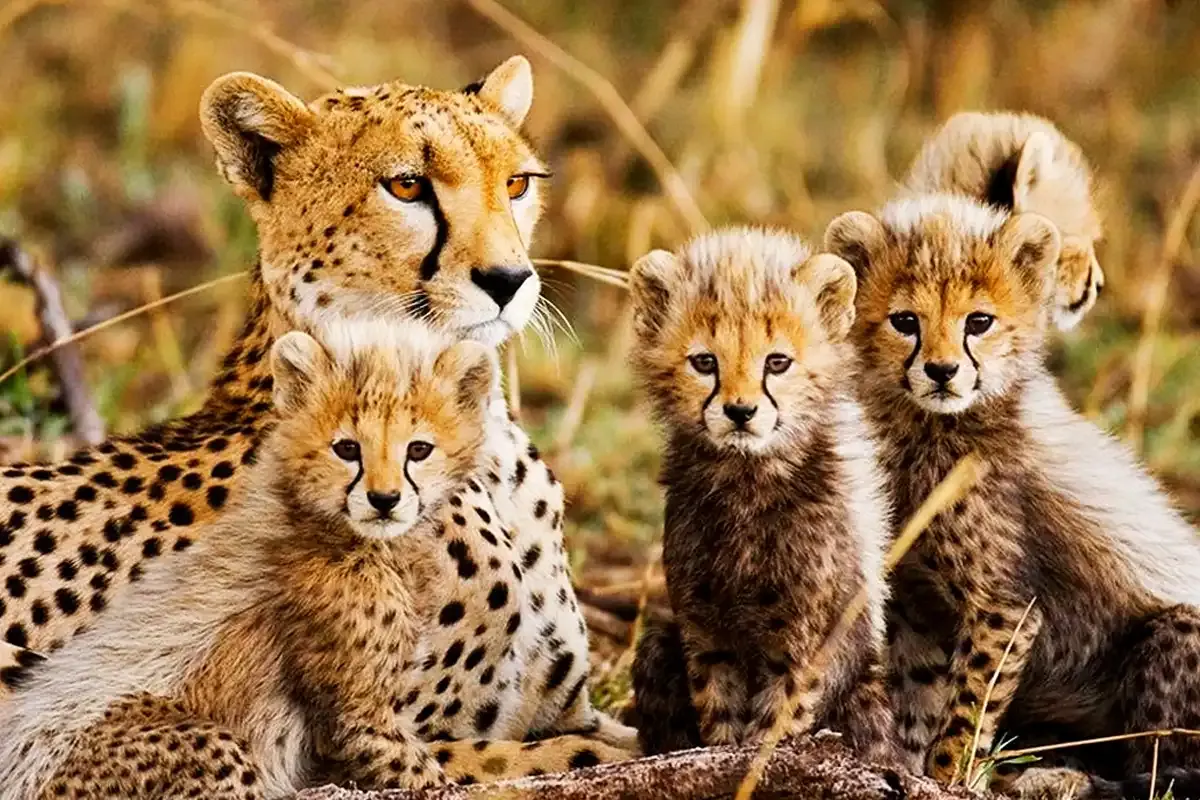
How they live: cheetahs hunt in daylight, relying on speed rather than strength. They are the fastest land animals and often use termite mounds or vehicles as lookouts. Mothers raise cubs alone; brothers sometimes form coalitions.
Leopard or cheetah? How to tell them apart
| Leopard | Cheetah | |
|---|---|---|
| Spots | Rosettes (rings) | Solid round spots |
| Face | No tear marks | Black "tear marks" from eyes to mouth |
| Build | Strong and stocky | Slim, long legs, small head |
| Activity | Mostly night | Daytime |
| Where | Trees, rivers, rocky areas | Open plains |
Best time to see big cats
Big cats are present all year. Two times stand out:
- December to March: calving season in the southern Serengeti and Ndutu, with intense predator action.
- June to October: the dry season, when animals gather near water and the grass is short, making cats easier to see.
Tips from our guides
- Go out early and stay out late. Cats are most active in the cool hours.
- Take full-day drives in big parks.
- Listen and look: alarm calls from baboons, impala or birds can reveal a hidden cat.
- Be patient at sightings: a sleeping lion may wake and hunt if you wait.
- Respect the animals: stay in the vehicle, keep quiet and give mothers with cubs space.
Read more in the Big Five in Tanzania and animals of the Serengeti, or see our photographic safaris. Tell us your dates.
A day following big cats
A typical big-cat day in the Serengeti begins before sunrise. Your guide drives slowly along a river, scanning the trees for a leopard returning from the night's hunt. As the sun rises, you find a lion pride resting near the remains of a kill, cubs playing in the grass. Mid-morning, on the open plains, a cheetah sits upright on a termite mound, watching a group of gazelles. You stop, switch off the engine, and wait. Lunch is a picnic under an acacia. In the late afternoon, the lions start to stir, stretching and calling, and as the light turns gold you may watch them set off to hunt as you head back to camp.
Big cats and photography
- Light: early morning and late afternoon give soft, warm light.
- Lens: a zoom of around 100–400 mm covers most situations.
- Patience: cats spend most of the day resting; the action often comes after a long wait.
- Eye level: ask your guide to position the vehicle for a low, eye-level angle where possible.
See our photography safari tips.
Other cats to look for
Tanzania also has smaller wild cats. The serval, with its long legs and large ears, hunts rodents in the grasslands of the Serengeti and the Ngorongoro Crater. The caracal and the African wild cat are rarely seen but present. Spotting any of them is a highlight for many guides.
Big cats in the green season
The green season (roughly November to May) is often overlooked for big cats, but it can be excellent. In the southern Serengeti, the calving season brings intense predator activity, and the open plains make cheetahs easier to find. Fewer vehicles mean more private sightings. The trade-offs are taller grass in some areas and occasional rain. See Tanzania safari in February.
Conservation of big cats
Lions, leopards and cheetahs face threats from habitat loss, conflict with livestock owners and declining prey outside protected areas. Several projects in Tanzania work with communities to reduce conflict, for example by helping herders build stronger enclosures for their animals at night. Park fees and responsible tourism help to fund protection.
Where big cats are less common
Some parks are wonderful for other reasons but not the best for cats. In Arusha National Park there are no lions, and leopards are rarely seen. In Lake Manyara, lions are present but the park is small. If big cats are your priority, give the Serengeti the most nights, and add Tarangire, the Ngorongoro Crater or, in the south, Ruaha.
Frequently asked questions
Where is the best place to see big cats in Tanzania?
The Serengeti is the best overall: lions everywhere, leopards in the central Seronera valley and cheetahs on the southern and eastern plains.
When is the best time to see big cats?
All year. The calving season (December–March) and the dry season (June–October) are especially good.
How do I tell a leopard from a cheetah?
Leopards have rosette-shaped spots and a stocky build; cheetahs have solid spots, black tear marks on the face and a slim build.
Can I see lions in trees in Tanzania?
Yes, sometimes, especially in Lake Manyara and Tarangire. It is never guaranteed.
Are big cats dangerous on safari?
Not when you follow the rules. Stay in the vehicle, keep quiet and follow your guide's instructions, and big cats generally ignore safari vehicles.
Do leopards climb trees with their prey?
Yes. Leopards often drag their kills into trees to keep them away from lions and hyenas.
Is it possible to see all three big cats in one day?
In the Serengeti, yes, though never guaranteed. Lions are common, cheetahs are found on the open plains, and leopards need luck and patience.
Where do lions sleep?
Lions rest for much of the day, often in the shade of trees, on rocky kopjes or in long grass. Some prides rest in trees.
Are there lions in Arusha National Park?
No. Arusha National Park is known for giraffes, buffalo, colobus monkeys and walking safaris rather than big cats.
How close do vehicles get to big cats?
Close enough for good views, but guides keep a respectful distance and stay on the tracks where required, so the animals are not disturbed.
Do cheetahs hunt in the morning?
Yes. Cheetahs hunt mostly in daylight, often in the morning and late afternoon, to avoid competition with lions and hyenas.