
Tanzania safari in February
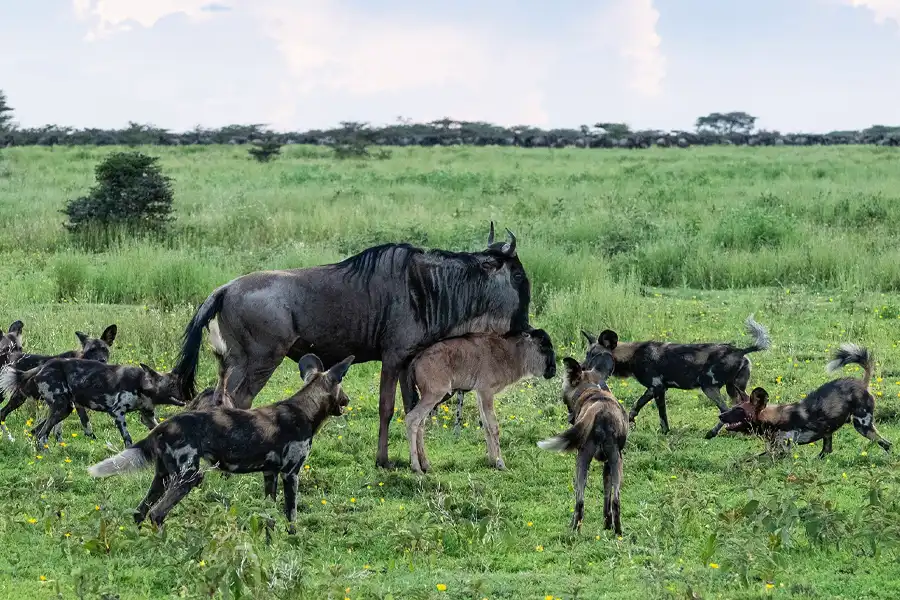
The peak of the calving season: hundreds of thousands of wildebeest calves are born on the southern Serengeti plains, and the predators are never far away.
If we could only choose one month for a safari, many of our guides would choose February. On the short-grass plains around Ndutu and the southern Serengeti, the wildebeest give birth to most of their calves within a few short weeks. A newborn calf can stand within minutes and run with the herd soon after, but the first days are dangerous, and lions, cheetahs, hyenas and jackals are everywhere.
February at a glance
| Weather | Warm to hot, mostly dry with short afternoon showers |
| Temperatures | Days around 27–31 °C; nights 14–17 °C; cool on the Ngorongoro rim |
| Migration | Southern Serengeti and Ndutu: peak calving |
| Best for | Calving, predator action, photography, Kilimanjaro, Zanzibar |
| Crowds and prices | Popular around Ndutu; elsewhere moderate |
The calving season
The herds come to the southern plains because the volcanic soils make the short grass rich in minerals, ideal for nursing mothers. Giving birth at the same time is a survival strategy: there are so many calves that predators cannot take more than a small share. For you that means drama: births, first steps, chases and big cats hunting in the open. It is one of the best times of the year for cheetah sightings, and the green plains with big skies are beautiful for photography.
The exact place depends on the rain: in a dry spell the herds may move a little, and they return when it rains again. That is why we choose camps close to where the herds actually are and keep in touch with our guides in the field.
Where to go in February
- Ndutu and the southern Serengeti: three or four nights, with full-day game drives.
- Ngorongoro Crater: on the way, for black rhino and dense wildlife.
- Olduvai Gorge: right next to the calving area, a short stop for human history.
- Lake Eyasi: a cultural day with the Hadzabe on the way.
Kilimanjaro and Zanzibar in February
- Kilimanjaro: still the January–March climbing season; mostly dry and clear.
- Zanzibar: hot and sunny. Stone Town hosts the Sauti za Busara music festival in February.
Good to know in February
- Book early: the best camps for the calving season fill up many months ahead.
- Bring a zoom lens and a bean bag; the action is often at a distance.
- Be ready for intense moments: predators hunting calves is nature at its rawest. Your guide will tell you what to expect.
- February is short: with the peak of the calving season, availability is tight; ask us early.
Safaris we recommend in February
- 7 Days Great Serengeti Migration Luxury Safari, focused on the southern plains.
- 5 Days Tanzania Big Five Luxury Safari with Tarangire, the Serengeti and the crater.
- 15 Days Luxury Honeymoon Safari & Zanzibar for a long trip with the beach.
See our Great Migration safaris and photographic safaris, or ask us where the herds are this year.
Tanzania month by month
January · February · March · April · May · June · July · August · September · October · November · December
For the whole year at a glance, read our guide to the best time to visit Tanzania.
Frequently asked questions
When is the calving season in Tanzania?
Mainly from late January to March, with the peak usually in February, on the short-grass plains of Ndutu and the southern Serengeti.
Is February a good time for a safari?
Yes, one of the best. The calving season brings huge herds and intense predator action, and the weather is warm and mostly dry.
Is February busy in the Serengeti?
The Ndutu area is popular during calving, and the best-placed camps fill up early. The rest of the northern circuit is moderately busy.
What is the weather like in February?
Warm to hot, with mostly dry days and occasional short afternoon showers. Mornings are cool on the Ngorongoro rim.
Can I climb Kilimanjaro in February?
Yes. February is part of the January–March climbing season, usually dry with clear mornings.