
14 Days Tanzania Safari & Zanzibar
Two weeks to do it properly: eight days on safari with three nights in the Serengeti and a cultural day at Lake Eyasi, then five nights in …
Can be fully customised
PriceOn request

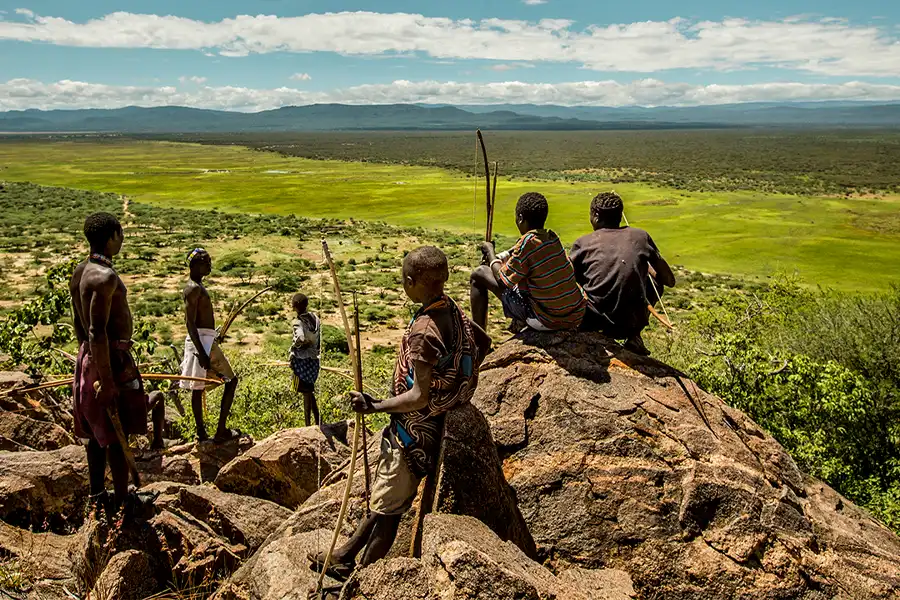
A soda lake at the foot of the Rift Valley, home to the Hadzabe, among the last hunter-gatherers in Africa, and the Datoga pastoralists. Culture, not game drives.
Lake Eyasi lies south-west of the Ngorongoro highlands, in a hot, dry valley at the foot of the Eyasi escarpment. The lake itself is shallow and salty, its size changing a lot with the seasons. But people come here for its inhabitants rather than its wildlife: Eyasi is home to the Hadzabe, one of the last groups of hunter-gatherers in Africa, and to the Datoga, pastoralists known for their metalwork.
A visit to Lake Eyasi is one of the most memorable cultural experiences in Tanzania, and also one that needs to be done thoughtfully. Below we explain what to expect and how to make your visit respectful.
The Hadzabe (or Hadza) have lived in this region for many thousands of years. A few hundred still live mainly by hunting with bow and arrow and gathering roots, berries, baobab fruit and honey. Their language uses click sounds and is not related to any other language in the region.
On a visit you leave very early in the morning with a local guide and translator to meet a Hadzabe group at their camp. If they agree, you may join a short hunt or foraging walk, watch them make fire with sticks, try shooting a bow, and sit around the fire while they share what they gathered.
The Datoga are cattle herders who live around the lake. They are skilled blacksmiths who make arrowheads (which they trade with the Hadzabe), knives and the brass jewellery worn by Datoga women. A visit to a Datoga homestead shows you how they melt scrap metal and shape it by hand, and how their life differs from that of their Hadzabe neighbours.
We believe cultural visits should benefit the people you meet and respect their dignity. We ask our guests to:
Lake Eyasi can be visited all year. The dry months, June to October and December to February, are easiest for travel and walking. It is hot, so the visit to the Hadzabe starts at dawn, when they set out to hunt.
One night is enough for the Hadzabe and Datoga visits; two nights give you a more relaxed pace. Eyasi fits well between Karatu and the Ngorongoro Crater, or as a detour on the way to the Serengeti.
There are a few lodges and tented camps near the lake.
Tell us your dates and we will plan a cultural day at Eyasi.
Highlighted months are the best time to visit.
Lake Eyasi can be visited all year. The dry months, June to October and December to February, are easiest. Visits to the Hadzabe start at dawn, when they leave to hunt and before the heat of the day.
Lake Eyasi is about 1.5–2 hours by road from Karatu, partly on unpaved roads. Most visitors come from Karatu or the Ngorongoro area, sleep one or two nights near the lake, and continue to the crater or the Serengeti.
It can be, if the visit is arranged with the community, the fees go to them, the group is small and you respect their privacy and rules. We arrange visits with local guides who know the Hadzabe well.
You leave at dawn with a guide and translator, meet a Hadzabe group at their camp and, if they agree, join a short hunt or foraging walk. You may see fire-making and archery and share the food they find.
The Datoga are cattle herders and skilled blacksmiths who live around Lake Eyasi. They make arrowheads, knives and brass jewellery from recycled metal.
One night is enough for the cultural visits. Two nights give you a more relaxed stay.
Not much big game. Eyasi is about culture and landscape. You may see flamingos, pelicans and many birds around the lake.
Every one can be changed to your dates, budget and pace.
Two weeks to do it properly: eight days on safari with three nights in the Serengeti and a cultural day at Lake Eyasi, then five nights in …
Can be fully customised
Ask us anything. We will reply by email with ideas for your trip.