

Safari experience
Great Migration safaris
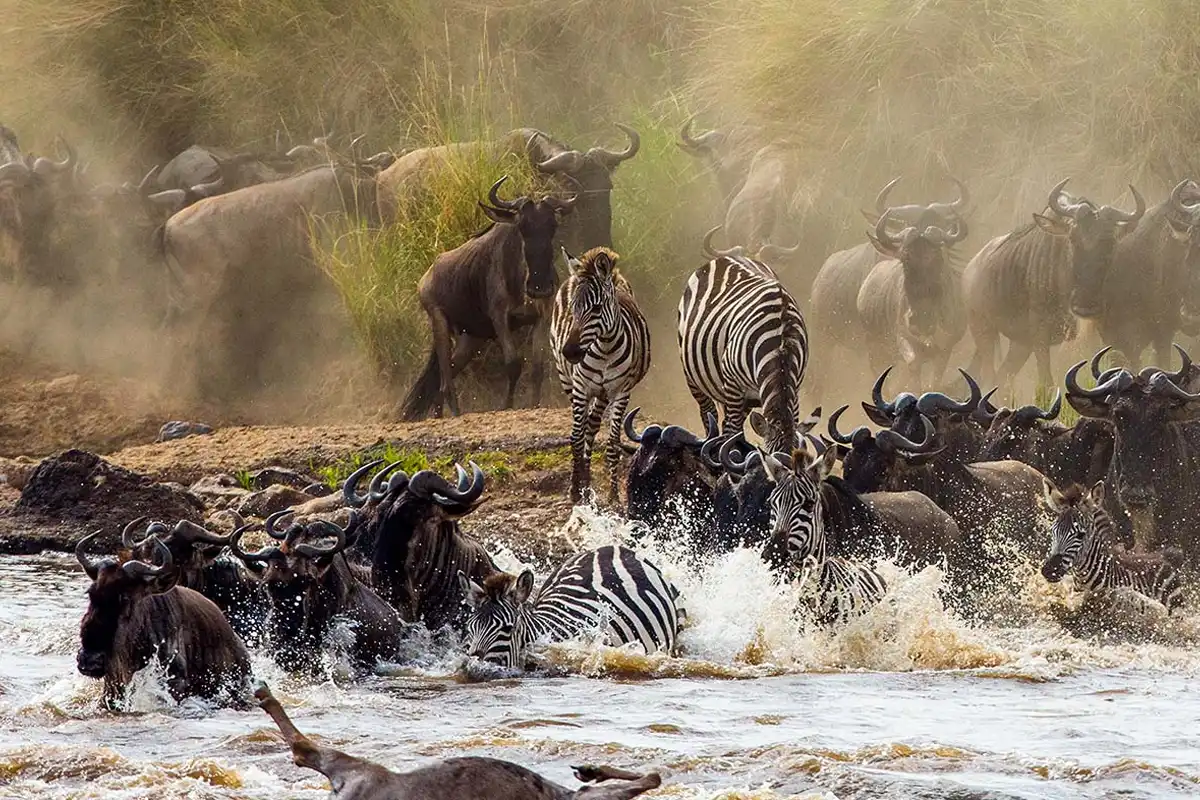
Here in northern Tanzania we don't just guide you through the Serengeti: we walk in the footsteps of our ancestors, who watched the herds long before tourists and cameras arrived. Every year more than a million wildebeest, with hundreds of thousands of zebras and gazelles, move in a great loop through the Serengeti and the Maasai Mara, following the rain and the fresh grass. Predators follow them every step of the way.
A Great Migration safari is all about timing and place. The herds are somewhere in the ecosystem every month, so the question is not whether you can see them, but what you want to see: newborn calves and big cats in the south, or the drama of the river crossings in the north. Our safaris below are built around the herds' usual pattern, and we fine-tune your camps to where they actually are when you travel.
No trip matches all of those
Try fewer filters, or tell us what you want and we will build the trip for you.
Trips without a published price match any budget: we quote them for your dates and group size.
The migration through the year
| Months | Where | Highlight |
|---|---|---|
| December – March | Southern Serengeti and Ndutu | Calving (peak around February), lions, cheetahs and hyenas hunting |
| April – May | Central and western Serengeti | Long columns on the move; green season, very few vehicles |
| June – July | Western Corridor | Grumeti River crossings, the wildebeest rut |
| July – October | Northern Serengeti (Kogatende, Lamai) | Mara River crossings |
| November | Eastern and central Serengeti | Herds heading south with the short rains |
Nature does not follow a timetable: the rains move the herds a few weeks earlier or later each year. That is why we choose seasonal or mobile camps close to the herds, and why your guide's local knowledge matters.
How to plan your migration safari
- For calving and predators: January to March, three or four nights around Ndutu and the southern plains.
- For river crossings: July to October, at least three nights in the northern Serengeti. Crossings can't be predicted to the day, so give yourself time.
- Fly or drive: the north is a long drive from Arusha. Many guests drive in through Ngorongoro and fly out, or fly both ways.
- Book early: the best-placed camps for the crossings and calving fill up a year ahead.
Read our full Great Migration guide and the Serengeti National Park guide, or tell us your dates and we will tell you where the herds are likely to be.
Frequently asked questions
When is the best time to see the Great Migration in Tanzania?
It depends on what you want to see. January to March for calving and predator action in the southern Serengeti; July to October for the Mara River crossings in the north; June to July for crossings on the Grumeti River in the west.
Can you guarantee a river crossing?
No one can. Herds may gather at the river for hours or days before crossing, or turn back. With three nights in the right area during the crossing season, your chances are very good.
Is the migration in Tanzania or Kenya?
Both. The herds spend most of the year in Tanzania's Serengeti and usually cross into Kenya's Maasai Mara for part of the dry season, roughly August to October, before returning south.
How many days do I need for a Great Migration safari?
At least three nights in the area where the herds are, plus travel days. A 6–8 day safari that includes the Ngorongoro Crater is a good choice.
What is the calving season?
Between about late January and March, most wildebeest calves are born on the southern plains within a few weeks. It is one of the best times for predator sightings, as lions, cheetahs and hyenas hunt the young.
Not sure which trip is right?
Tell us your dates, who is travelling and what you would love to see. We will suggest a route and send a free quote.