Kilimanjaro vs Everest Base Camp: Which Trek Is Right for You?
Two of the world's most famous treks. One reaches a summit at 5,895 m, the other a base camp at about 5,364 m. Here is how they compare.
Kilimanjaro and Everest Base Camp are on many travellers' bucket lists, and people often ask us which one to choose. They are very different experiences. Kilimanjaro is a climb to the top of a mountain; Everest Base Camp is a long trek to the foot of one. Here is an honest comparison to help you decide.
At a glance
| Kilimanjaro | Everest Base Camp | |
|---|---|---|
| Highest point | Uhuru Peak, 5,895 m | Base camp about 5,364 m; Kala Patthar viewpoint about 5,545 m |
| Days | 6–9 days on the mountain | About 12–14 days round trip from Lukla |
| Summit day | Long, cold night climb from about 4,600–4,700 m | No summit; long days at altitude |
| Accommodation | Tents (huts on Marangu) | Teahouses (lodges) in villages |
| Landscape | Rainforest, moorland, alpine desert, glaciers | Sherpa villages, high valleys, the Himalayan giants |
| Getting there | Fly to Kilimanjaro Airport | Fly to Kathmandu, then a small plane to Lukla |
| Add-ons | Safari and Zanzibar | Kathmandu, Chitwan, Pokhara |
Altitude and difficulty
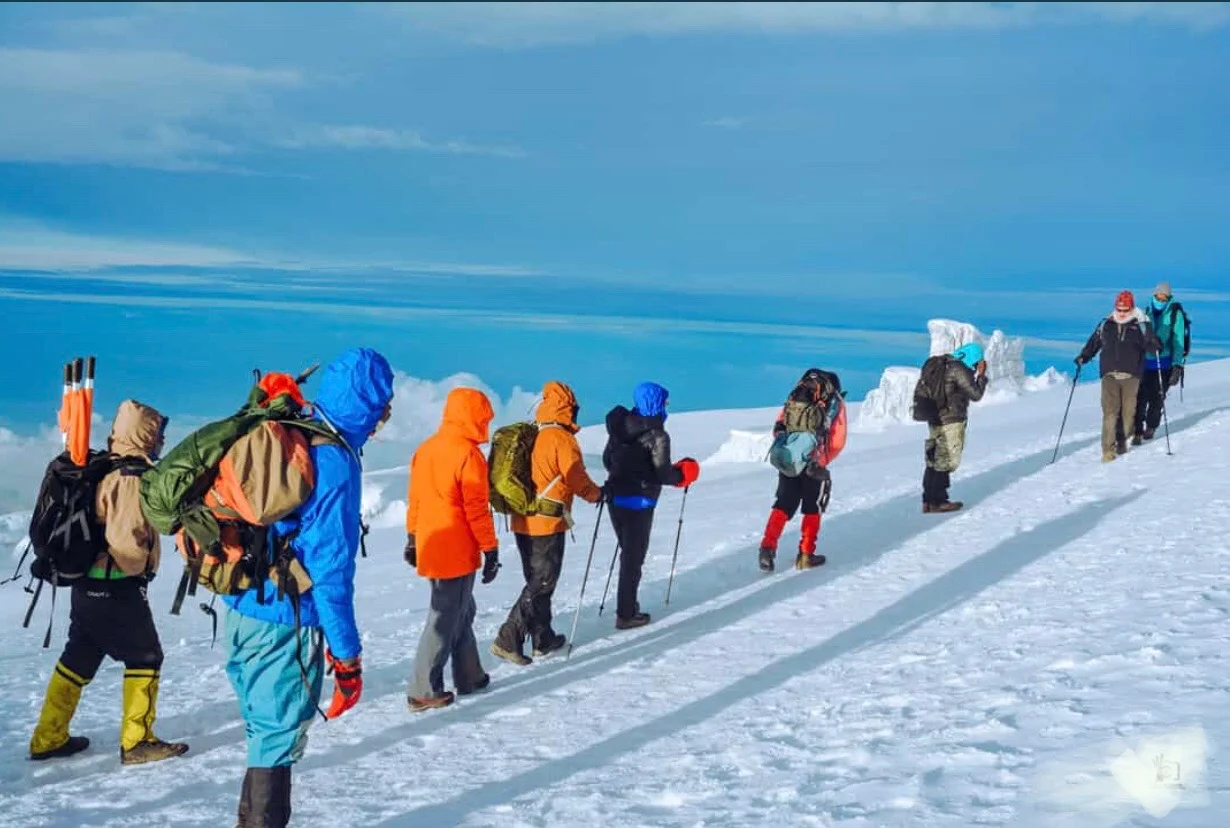
Kilimanjaro reaches a higher point, and it does so much faster. Most routes go from about 1,800 m to 5,895 m in five or six days, while Everest Base Camp treks spread a smaller height gain over more than a week. That makes Kilimanjaro's summit night harder: a steep, cold climb that starts around midnight, at an altitude where many people feel the effects. Everest Base Camp is long and tiring, with many days above 4,000 m, but there is no single summit push.
Neither requires technical climbing. For both, a good level of fitness and gradual acclimatisation are key. On Kilimanjaro, choosing a longer route (seven or eight days) makes a big difference. Read our altitude sickness prevention guide.
Scenery and experience
- Kilimanjaro takes you through five climate zones in a week, from rainforest with monkeys to the arctic summit with glaciers. You stand on the roof of Africa with the plains far below.
- Everest Base Camp takes you through Sherpa villages, monasteries and valleys surrounded by some of the highest mountains on earth. You see Everest, but you don't climb it.
Time and cost
Kilimanjaro needs less time: a climb can fit into a one- or two-week holiday, often with a safari afterwards. Everest Base Camp needs about two weeks including Kathmandu. Costs vary widely for both. Kilimanjaro's park fees are significant, while Everest treks have lower permit costs but longer trips. Read our Kilimanjaro cost guide.
Best seasons
- Kilimanjaro: January to mid-March and June to October. See the best time to climb Kilimanjaro.
- Everest Base Camp: usually spring (March–May) and autumn (late September–November).
Which should you choose?
- Choose Kilimanjaro if you want to stand on a summit, have limited time, and would love to add a safari or beach.
- Choose Everest Base Camp if you prefer a longer trek with village life and views of the world's highest peaks, and don't mind the extra time.
- Do both if you can: many trekkers do one, then dream of the other.
Climbing Kilimanjaro with us
See our Kilimanjaro routes, compare the routes in our routes comparison, and read our 12-week training program. Want to add a safari? See 11 Days Kilimanjaro Machame & Safari. Ask us for advice on your route.
Training and preparation
Whichever trek you choose, prepare for months rather than weeks. Regular long hikes with a loaded daypack, stair or hill training, and cardio such as cycling or running build the stamina you need. For Kilimanjaro, practise walking several hours on consecutive days, and if possible, do a hike at altitude beforehand; Mount Meru is a perfect warm-up. See our 12-week Kilimanjaro training program and our 4 Days Mount Meru Climb.
Gear
The gear lists are similar: layers, a warm down jacket, waterproofs, good boots and a warm sleeping bag. Kilimanjaro's summit night is often colder than the nights at Everest Base Camp, because you are higher and moving in the coldest hours before sunrise. On Kilimanjaro, porters carry your main bag; on Everest Base Camp treks, porters or yaks usually do. See our Kilimanjaro gear list.
Success rates
On Kilimanjaro, the share of climbers who reach the summit depends strongly on the route and the number of days: longer routes give the body more time to adjust. Read maximising your Kilimanjaro success rate.
A day on each trek
On Kilimanjaro you wake in a tent to hot tea brought by your crew, walk four to seven hours with long breaks, arrive at camp to find your tent already set up, and eat a cooked dinner in a mess tent. Summit night begins around midnight.
On the Everest Base Camp trek you sleep in a teahouse in a mountain village, eat dal bhat or noodles in a warm dining room, and walk five to seven hours a day through valleys and over high passes, with acclimatisation days in villages such as Namche Bazaar.
If you have done one, should you do the other?
Many trekkers who climbed Kilimanjaro dream of the Himalayas, and the reverse. Experience on one helps with the other: you know how your body reacts to altitude, how to pace yourself and what gear works. If you have done Everest Base Camp, Kilimanjaro's summit night will still be a new challenge, but you will arrive well prepared.
Combining Kilimanjaro with more of Tanzania
One big advantage of Kilimanjaro is what comes after the climb: a safari in the Serengeti and the Ngorongoro Crater, or a few days on the beach in Zanzibar. See our 14 Days Kilimanjaro, Safari & Zanzibar.
Frequently asked questions
Is Kilimanjaro harder than Everest Base Camp?
Kilimanjaro's summit night is harder because you gain altitude faster and climb higher. Everest Base Camp is longer, with more days at altitude, but no summit push.
Which is higher, Kilimanjaro or Everest Base Camp?
Kilimanjaro's summit, Uhuru Peak, is 5,895 m. Everest Base Camp is about 5,364 m, and the nearby Kala Patthar viewpoint about 5,545 m.
Do I need climbing experience for either?
No technical climbing is needed for either. Good fitness, the right gear and time to acclimatise matter most.
Which trek takes less time?
Kilimanjaro: six to nine days on the mountain. Everest Base Camp usually needs about two weeks including travel in Nepal.
Can I combine Kilimanjaro with a safari?
Yes, and many climbers do. A three- or four-day safari after the climb is a perfect way to relax.
Which trek has better views?
Different ones. Kilimanjaro offers views over the African plains and of its own glaciers; Everest Base Camp offers close views of the highest mountains on earth.
Can beginners do Kilimanjaro?
Yes, many first-time trekkers reach the summit with good preparation, a longer route and a careful pace.
Is Kilimanjaro or Everest Base Camp more expensive?
It depends on the route, the operator and the length of the trip. Kilimanjaro has significant park fees; Everest Base Camp trips are longer. Ask us for a Kilimanjaro quote.
Which trek is colder?
Kilimanjaro's summit night is often colder because you are higher and climbing in the coldest hours before sunrise. Both treks need warm gear.
Can I climb Kilimanjaro in the rainy season?
It is possible, but April and May are the wettest months, with muddy trails and cloud. The dry months give the best conditions.