Kilimanjaro Full Moon Climb: Summit Night by Moonlight
Climbing to Uhuru Peak under a full moon, with the glaciers glowing silver: what a full moon climb is like, how to time it, and the pros and cons.
Summit night on Kilimanjaro usually starts around midnight, in the dark, with only the beam of your headlamp and the line of lights of climbers above you. On a full moon climb, everything changes: the mountain is lit in silver light, the glaciers glow, and you can see the plains far below long before sunrise. For many climbers, it is the most magical way to reach the Roof of Africa.
What is a full moon climb?
It is simply a climb timed so that your summit night falls on or close to the night of the full moon. There is no special route or permit: you choose your route and adjust your start date so that the summit attempt matches the moon.
Why climb under a full moon?
- Light: you may be able to see the path and the landscape without a headlamp on clear nights.
- Views: the glaciers, the crater rim and the clouds below are lit in silver.
- Mood: many climbers say the moonlight makes the long, cold night feel less daunting.
- Photos: moonlit landscapes, if you can hold your camera steady in the cold.
The downsides
- Busier dates: full moon dates are popular, so popular routes and campsites can be busier.
- Clouds: the moon helps only if the sky is clear.
- Fewer stars: the bright moon hides much of the Milky Way.
- Less flexibility: your start date is fixed by the moon calendar.
How to time your climb
- Find the full moon date for your travel month.
- Choose your route and number of days. For example, on a 7-day Machame climb, summit night is usually the night between day 5 and day 6.
- Count back from the full moon to your start date, so your summit night falls on the full moon or the night before.
The night before the full moon is often just as bright, and the moon rises earlier, which can help on summit night.
Best routes for a full moon climb
Any route works, but longer routes give you more time to acclimatise, which matters more than the moon:
Compare them in our Kilimanjaro routes comparison.
Best season
Combine the full moon with the dry seasons: January to mid-March and June to October, when the chance of a clear sky is highest. Read about the best time to climb Kilimanjaro.
Tips for summit night
- Still bring a headlamp with fresh batteries; clouds can cover the moon.
- Dress for extreme cold: temperatures near the summit are well below freezing at night. See Kilimanjaro temperature.
- Go slowly: "pole pole" (slowly, slowly) is the rule.
- Keep batteries warm inside your jacket.
- Enjoy the moment: stop, look back and take in the moonlit view.
Book early
Full moon dates in the dry season are popular. Book several months ahead, especially for July, August and the January–February season.
Ask us to match your climb to the full moon, and read our 12-week training program to prepare.
Example: timing a 7-day Machame climb
Say the full moon falls on a Saturday. On a 7-day Machame climb, you usually start the summit attempt around midnight at the end of day 5. To put that night on the Friday or Saturday of the full moon, you would start your climb on the Monday or Tuesday of the same week. We do this calculation for you when you choose your route.
What summit night is like
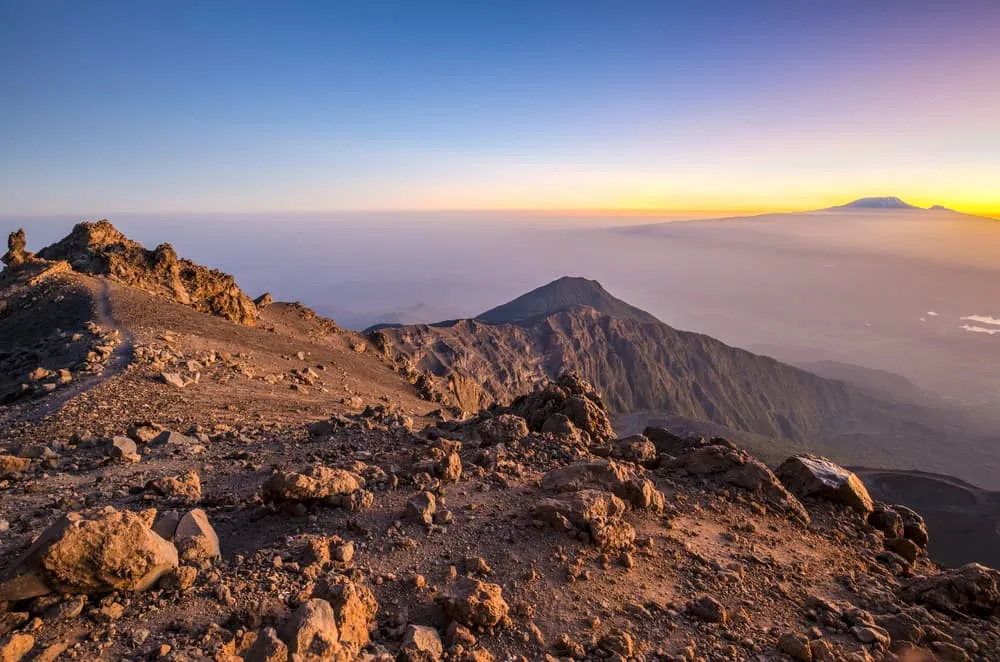
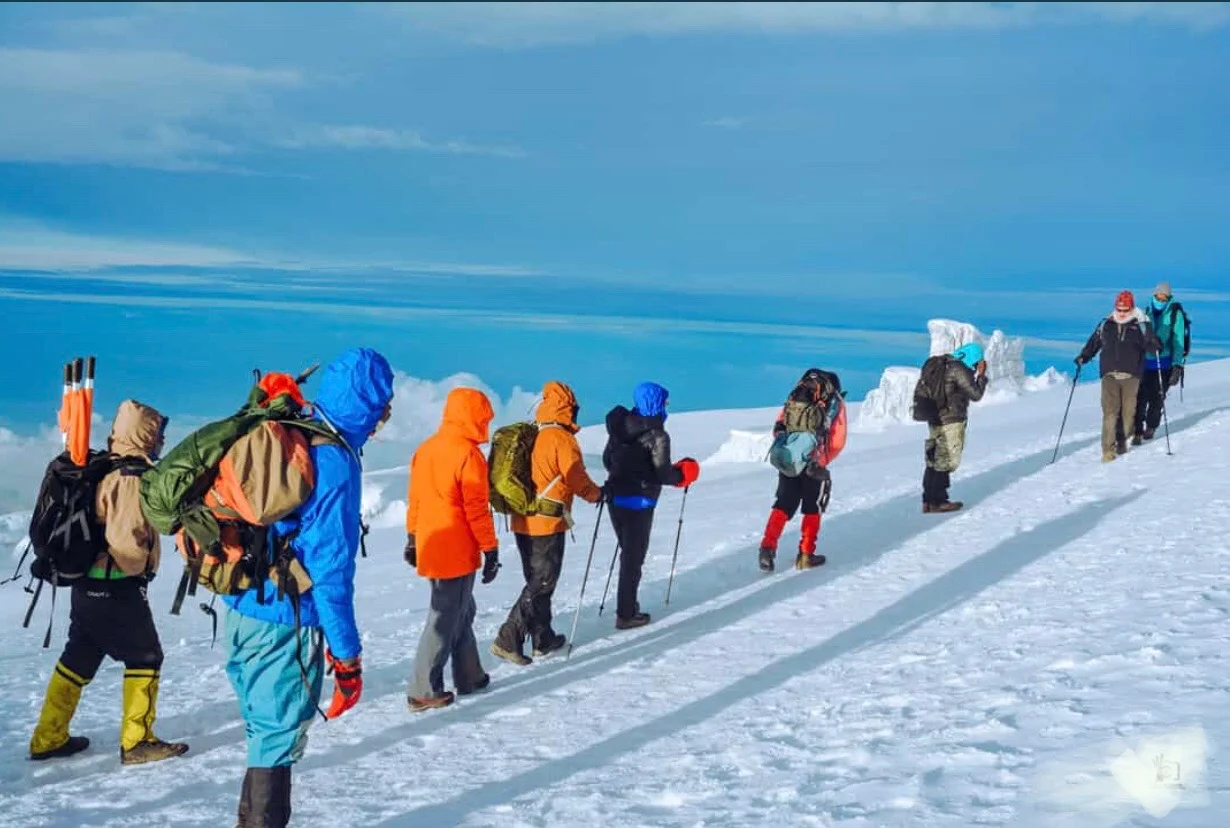
You wake up around 11 pm, drink a hot tea, eat a few biscuits, and put on every layer you have. Around midnight you start walking slowly upwards in a line of climbers, guided by your guide's pace. The first hours are steep and cold. Under a full moon, the scree slope, the glaciers and the clouds far below glow in silver light. At Stella Point or Gilman's Point you reach the crater rim, and from there it is a slower, gentler walk to Uhuru Peak, ideally arriving around sunrise. Then comes the long descent to camp for a rest.
Gear for a cold summit night
- A warm down jacket and several insulating layers.
- Windproof and waterproof outer layers.
- Thermal gloves with mittens over them, and a warm hat and buff.
- Insulated water bottles or bottle covers, as water can freeze.
- Spare batteries kept warm inside your jacket.
- Hand warmers.
See the full Kilimanjaro gear list.
Is it safe?
A full moon climb is as safe as any other climb, and the extra light can make the path easier to see. The same rules apply: go slowly, drink plenty of water, tell your guide immediately if you feel unwell, and turn back if your guide says so. The summit is optional; coming home safely is not.
After the summit
Once you are back at camp after summit night, you rest, eat and continue down to a lower camp. The next day you reach the gate, collect your certificate and return to Moshi for a hot shower and a celebration. Many climbers add a safari or a few days in Zanzibar afterwards: see our Kilimanjaro + safari trips.
Frequently asked questions
Is a full moon climb on Kilimanjaro worth it?
For many climbers, yes. The moonlight makes summit night brighter and the views magical. The trade-offs are busier dates and fewer stars.
Do I still need a headlamp?
Yes. Clouds can hide the moon, and you will need light in camp and in rocky sections.
How do I time a full moon climb?
Find the full moon date, choose your route and number of days, and count back so your summit night falls on the full moon or the night before.
Which route is best for a full moon climb?
Any route works. Choose a longer route, such as 7-day Machame or 8-day Lemosho, for better acclimatisation.
Are full moon climbs more crowded?
Often a little, especially in the dry season on popular routes. Quieter routes like Rongai or Lemosho can help.
Does the full moon make summit night warmer?
No. Temperatures are the same; the moon only adds light. Dress for extreme cold.
Can I see the stars on a full moon climb?
Fewer than on a dark night. The bright moon hides many stars and the Milky Way.
How far in advance should I book a full moon climb?
Several months ahead, especially in the dry seasons, as full moon dates are popular.
Which month is best for a full moon climb?
Choose a full moon in the dry months: January to mid-March or June to October, when clear skies are most likely.
Can I combine a full moon climb with a safari?
Yes. Plan the climb around the full moon, then add a three- or four-day safari afterwards.
Is it more expensive to climb at full moon?
The climb itself costs the same, but popular full moon dates can fill up early, so book in good time.
Can I climb under the full moon on the Marangu route?
Yes. Any route can be timed to the full moon. Marangu uses huts, but its shorter versions give less time to acclimatise, so we recommend six days.