Tanzania is one of the most rewarding travel destinations on earth. It is also one that rewards preparation. The travellers who arrive smoothly — walking through immigration without a hitch, stepping into their safari vehicle within the hour — are the ones who sorted their requirements weeks in advance rather than days before departure.
The good news is that Tanzania’s entry requirements are genuinely straightforward. A visa, a valid passport, a few health documents, and the right insurance — that is the foundation of everything. Get those right, and the rest of your focus can stay where it belongs: on the Serengeti plains, the rim of the Ngorongoro Crater, or the summit of Kilimanjaro.
At Northern Masailand Safaris, we send every guest a comprehensive pre-departure document before they travel. This guide covers what is in it — the complete picture of what you need to enter Tanzania, stay healthy, and travel with confidence.
Tanzania Entry Requirements at a Glance
| Requirement | Detail | Where to Sort It |
|---|---|---|
| Valid passport | Minimum 6 months validity beyond your departure date from Tanzania; at least 1 blank page | Check now — renew if needed well before travel |
| Tanzania visa | Required for most nationalities; e-Visa recommended | immigration.go.tz — apply at least 3–4 weeks before travel |
| Yellow Fever certificate | Required if arriving from a Yellow Fever endemic country | Travel clinic; carry the physical yellow card |
| Return or onward ticket | Proof of onward travel may be requested at immigration | Your flight booking confirmation |
| Travel insurance | Strongly recommended; medical evacuation cover essential | Purchase as soon as you book your safari |
| Proof of accommodation | Lodge or safari camp confirmation may be requested | Provided by Northern Masailand Safaris for all guests |
| Malaria prophylaxis | Strongly recommended for all Tanzania destinations | Travel clinic — consult at least 6–8 weeks before departure |
| Sufficient funds | Immigration may ask for evidence of funds; $50/day is a common benchmark | Cash USD or card; be prepared to demonstrate if asked |
Passport Requirements
Your passport must be valid for at least six months beyond the date you plan to leave Tanzania. This is a hard requirement — airlines will typically refuse to board you if your passport does not meet this threshold, regardless of your visa status. Check your passport expiry date now, against the date you plan to return home, and build in a generous buffer.
You will also need at least one full blank page in your passport for the Tanzania entry stamp. If your passport is running low on pages, consider renewal before travel — a passport rejected at check-in is a preventable disaster.
For families travelling with children: every child requires their own passport. Unaccompanied minors — or children travelling with only one parent — may need additional documentation such as a notarised letter of consent from the absent parent. If this applies to your group, contact us for specific guidance well in advance.
Tanzania Visa Requirements
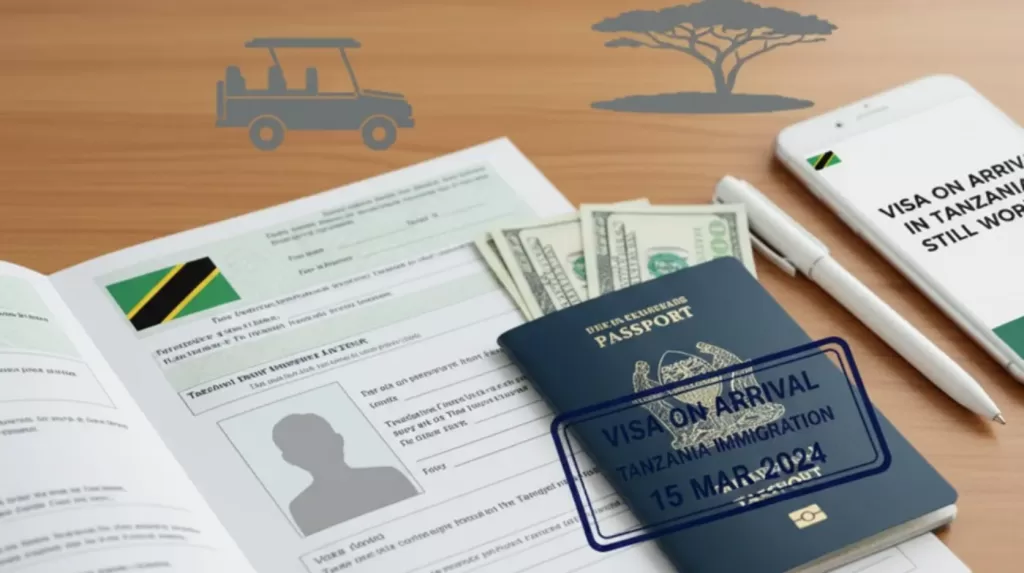
Most nationalities require a visa to enter Tanzania. The Tanzania e-Visa — applied for online through the official government portal — is the recommended route for the vast majority of travellers. It is straightforward, fully digital, and eliminates the need to queue at the visa on arrival desk after a long international flight.
How to Apply for the Tanzania e-Visa
- Visit the official portal at immigration.go.tz
- Create an account and complete the application form
- Upload your passport photo, flight confirmation, and accommodation booking
- Pay the fee online ($50 for a single-entry tourist visa)
- Receive your e-Visa approval by email within 3–10 business days
- Print the approval letter and carry it with your passport
For full details on visa types, fees, exempt nationalities, the East Africa Tourist Visa, and the most common application mistakes — read our complete Tanzania visa guide. It covers everything from single-entry tourist visas to multi-country combinations for travellers extending into Kenya, Uganda, or Rwanda.
Visa-on-Arrival
Visa on arrival is available at Kilimanjaro International Airport, Julius Nyerere International Airport in Dar es Salaam, and Zanzibar’s Abeid Amani Karume International Airport, among other entry points. The fee is the same as the e-Visa ($50 for a single-entry tourist visa), payable in cash USD. We always recommend the e-Visa — queues at the visa on arrival desk during peak season can be substantial, and arriving with your approval letter already printed means you clear immigration faster and reach your guide sooner.
Health Requirements and Vaccinations

Tanzania sits in a tropical zone and carries certain health risks that are entirely manageable with the right preparation taken well before you travel. This section is one of the most important in your pre-departure planning — do not leave it until the last week.
Yellow Fever — A Hard Entry Requirement
If you are travelling to Tanzania from a country where Yellow Fever is endemic, you must carry a valid International Certificate of Vaccination or Prophylaxis (ICVP) — the yellow card — as proof of vaccination. This is a hard entry requirement, not a recommendation. Arriving without it when required can result in denial of entry or mandatory vaccination at the airport.
Even where it is not technically required, many travel health professionals recommend Yellow Fever vaccination as standard for sub-Saharan Africa. Carry the original physical certificate with your passport at all times — a photo on your phone is not sufficient.
Recommended Vaccinations
| Vaccination | Status for Tanzania | Notes |
|---|---|---|
| Yellow Fever | Required (from endemic countries); recommended for all | Carry physical ICVP yellow card; single dose gives lifelong protection |
| Hepatitis A | Strongly recommended | Transmitted via contaminated food and water; high risk in rural areas |
| Hepatitis B | Recommended | Transmitted via blood and body fluids; standard travel vaccine |
| Typhoid | Recommended | Transmitted via contaminated food and water; risk across all regions |
| Tetanus / Diphtheria / Polio | Recommended (boosters) | Confirm your standard schedule is up to date before travel |
| Meningococcal Meningitis | Consider — discuss with your doctor | Risk present in sub-Saharan Africa; worth discussing at travel clinic |
| Rabies | Consider for extended stays or wildlife contact | Particularly relevant for Kilimanjaro trekkers and wildlife guides |
| Cholera | Consider for remote areas | Risk in areas with limited water sanitation; low risk for most safari itineraries |
This table is guidance only. Always consult a qualified travel health professional for advice specific to your health history, itinerary, and country of residence.
Malaria Prevention
Malaria is present throughout Tanzania — in the national parks, along the coast, and in all lowland areas. It is the single most important ongoing health precaution for Tanzania visitors and must be taken seriously. The good news is that it is entirely preventable with the right measures in place.
- Anti-malarial prophylaxis: Consult your doctor or travel health clinic at least 6–8 weeks before departure. Common options include Malarone (Atovaquone/Proguanil), Doxycycline, and Mefloquine — your doctor will advise on the best fit for your health profile and itinerary
- DEET-based insect repellent: Apply every evening and early morning when mosquitoes are most active
- Mosquito nets: Provided as standard at all quality lodges and camps — always sleep under one
- Clothing: Long sleeves and trousers after dusk significantly reduce exposure
Altitude affects malaria risk. The summit of Kilimanjaro and the Ngorongoro highlands carry minimal risk due to cool temperatures. Lowland parks — particularly Selous, Katavi, and the Tanzanian coast — carry higher risk. Discuss your specific itinerary with your travel clinic so the prophylaxis recommendation is tailored appropriately.
For a deeper look at Tanzania’s health and safety landscape, read our complete Tanzania travel safety guide.
Travel Insurance Requirements

Travel insurance with emergency medical evacuation cover is non-negotiable for a Tanzania safari. This is the single most important practical item on your pre-departure checklist — more important than your packing list, more important than your adapter plug.
In the event of a serious medical emergency in a remote park — and Tanzania’s finest parks are genuinely remote — evacuation by light aircraft to a properly equipped hospital can cost $15,000 to $50,000 or more. Without insurance that explicitly covers medical evacuation, this cost falls on you or your family at the worst possible moment.
Key requirements for your policy:
- Emergency medical evacuation — unlimited or at least $500,000
- Medical treatment — minimum $100,000–$200,000
- Trip cancellation and curtailment — covering your full safari cost
- High-altitude cover to at least 6,000m — essential for Kilimanjaro climbers
- Adventure activities — confirm game drives, walking safaris, and light aircraft are covered
- Coverage for every country on your itinerary
For a complete guide to choosing the right policy, understanding exclusions, and knowing the right questions to ask, read our dedicated Tanzania travel insurance guide.
What to Expect at Tanzania Immigration
Arriving at Kilimanjaro International Airport (the main gateway for Northern Circuit safari travellers) or Julius Nyerere International in Dar es Salaam is a smooth experience for travellers who arrive prepared. Here is what the immigration process typically looks like:
- Health screening: Temperature checks and Yellow Fever certificate inspection (if applicable) at the health desk before immigration
- Immigration queue: Separate queues for e-Visa holders and visa on arrival applicants — e-Visa holders typically move significantly faster
- Document check: Passport, e-Visa approval printout (or visa on arrival payment), Yellow Fever certificate if required, and occasionally proof of onward travel or accommodation
- Biometrics: Fingerprints and photograph taken at the immigration desk — standard procedure
- Entry stamp: Passport stamped with your permitted duration of stay
- Baggage collection and customs: Declare any items required and proceed to the arrivals hall
Your Northern Masailand Safaris guide or transfer driver will meet you in the arrivals hall with a name board. From there, your safari begins.
Money, Currency and Financial Requirements

Tanzania’s official currency is the Tanzanian Shilling (TZS). For tourists and safari travellers, however, US dollars are the practical day-to-day currency — accepted for park fees, tips, market purchases, lodge extras, and most tourist transactions.
What to Bring
- USD cash in small denominations: $1, $5, $10, and $20 bills are the most useful. Large bills ($100) can be difficult to change in remote areas and smaller denominations are essential for tipping
- Credit and debit cards: Accepted at most lodges, hotels, and larger establishments. Visa and Mastercard are most widely accepted
- ATMs: Available in Arusha and Dar es Salaam. Largely absent in national park areas — do not rely on them once you leave the city
Tipping
Tipping is a meaningful part of safari culture and an important income supplement for the guides, drivers, and camp staff who make your experience what it is. The standard rates are:
| Recipient | Standard Tip | How to Pay |
|---|---|---|
| Driver-guide | $20 – $30 per day | Directly to your guide at the end of the safari, in USD cash |
| Camp / lodge staff | $5 – $10 per person per day | Left at reception on checkout; some camps have a central tip box |
| Kilimanjaro guides | $20 – $25 per day | Directly to lead guide at the end of the climb |
| Kilimanjaro porters | $8 – $12 per day per porter | Distributed by the lead guide or directly at the final camp |
| Cook (Kilimanjaro) | $12 – $15 per day | Directly at the end of the climb |
Tip generously and in USD cash. It matters far more to the recipient than you may realise.
Practical Items to Sort Before You Travel
Beyond the official entry requirements, these practical preparations make a meaningful difference to the smoothness and enjoyment of your trip:
Packing
Neutral-coloured, lightweight clothing, a wide-brimmed hat, quality insect repellent, and the right footwear are the foundation of a comfortable safari. Safari vehicles have limited storage — pack light, pack smart, and use a soft-sided duffel bag rather than a hard suitcase. Our complete Tanzania safari packing list covers every item you need and every item you should leave at home.
Plastic Bag Ban
Tanzania has a strict ban on single-use plastic bags. Do not bring plastic carrier bags into the country — they will be confiscated at the airport. Pack fabric tote bags as an alternative.
Photography Equipment
If you are bringing significant camera equipment — particularly telephoto lenses or drone equipment — check the regulations before you travel. Drone use in national parks requires a permit from the Tanzania Civil Aviation Authority and is subject to specific park regulations. Undeclared drones may be confiscated at customs. For more on photographing Tanzania at its best, see our photographic safari page.
Connectivity and Communication
Mobile connectivity in Tanzania’s cities and larger towns is good. In national parks and remote safari areas, coverage is limited or absent — which is, honestly, one of the great pleasures of the bush. Most camps offer WiFi of varying quality. Inform family and colleagues before you travel that you may be unreachable for stretches of several days and that this is entirely normal.
Time Zone
Tanzania operates on East Africa Time (EAT), which is UTC+3. Tanzania does not observe daylight saving time. Adjust your devices on arrival and factor the time difference into communication with home.
Requirements for Kilimanjaro Climbers
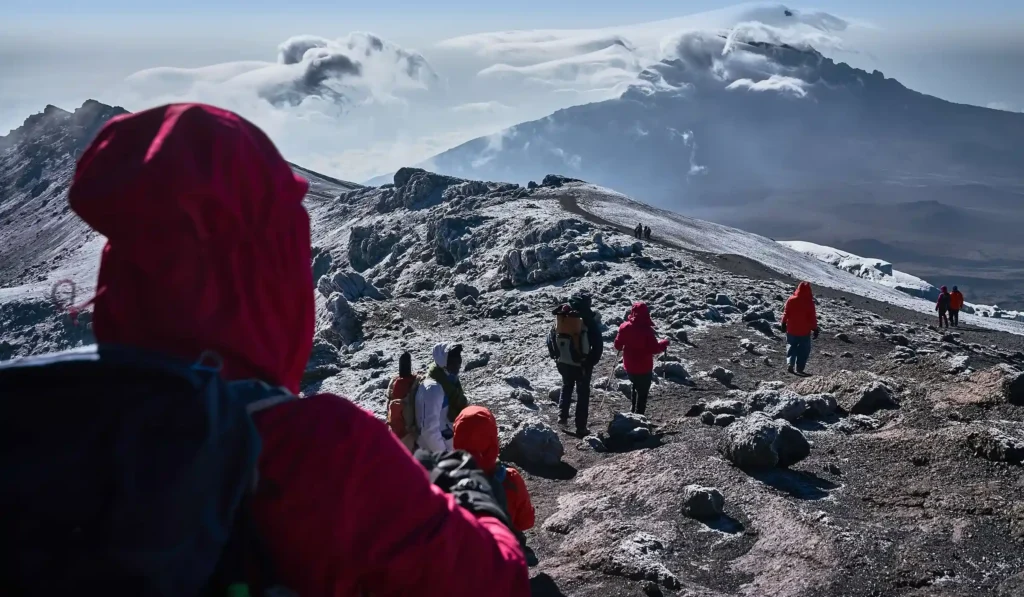
If your Tanzania trip includes a Kilimanjaro climb, your preparation requirements go beyond standard safari requirements. Key additional considerations:
- Specialist travel insurance: Your policy must cover trekking to at least 5,895m and include helicopter rescue from high altitude. Standard policies frequently exclude this — confirm explicitly before you purchase.
- Fitness preparation: Several months of regular cardiovascular training is strongly recommended. Discuss your fitness preparation plan with us when you book.
- Altitude sickness awareness: Acute Mountain Sickness (AMS) is the leading cause of evacuation from Kilimanjaro. Understand the symptoms — persistent headache, nausea, dizziness, loss of coordination — and commit to the acclimatisation protocols your guide establishes.
- Route selection: Longer routes give significantly better acclimatisation and higher summit success rates. The Lemosho Route and Northern Circuit Route are our most recommended for first-time climbers who want to maximise their summit chances.
- Gear: Cold-weather layering, waterproof outer shell, trekking poles, and broken-in boots are essential. A full gear list is provided when you book your climb with us.
All other routes — the Machame Route, Marangu Route, Rongai Route, Umbwe Route, Shira Route, and Western Breach Route — each have their own specific preparation considerations, covered in detail on their individual pages.
Requirements for Multi-Country East Africa Travel

Many of our guests combine Tanzania with wider East Africa — crossing into Kenya to visit the Masai Mara, or extending into Uganda or Rwanda for gorilla trekking in Bwindi Impenetrable National Park or Volcanoes National Park.
Each additional country has its own entry requirements, visa processes, and health considerations. The key points for multi-country travellers:
| Country | Visa Requirement | Key Health Notes | Special Considerations |
|---|---|---|---|
| Kenya | eTA (Electronic Travel Authorisation) required for most nationalities; free for some | Malaria prophylaxis; Yellow Fever if from endemic country | Separate eTA from Tanzania visa; apply at etakenya.go.ke |
| Uganda | e-Visa required for most nationalities ($50); East Africa Tourist Visa accepted | Malaria prophylaxis; Yellow Fever required | Gorilla permits ($700) must be secured separately and well in advance |
| Rwanda | Visa on arrival or e-Visa ($30–$50); many nationalities visa-free | Malaria prophylaxis; Yellow Fever recommended | Gorilla permits ($1,500) must be secured well in advance; strict conservation rules |
We handle all cross-border logistics — permits, transfers, and documentation — for guests on multi-country itineraries. You navigate nothing alone. Start planning your East Africa journey here.
Your Complete Pre-Departure Checklist
| Task | When to Complete | Status |
|---|---|---|
| Check passport validity (6+ months beyond return date) | As soon as you book | ☐ |
| Apply for Tanzania e-Visa | 3–4 weeks before travel (minimum) | ☐ |
| Purchase comprehensive travel insurance | As soon as you book | ☐ |
| Visit travel health clinic | 6–8 weeks before departure | ☐ |
| Get Yellow Fever vaccination and obtain yellow card | At travel clinic visit | ☐ |
| Begin malaria prophylaxis course | As directed by your doctor (often 1–2 weeks before travel) | ☐ |
| Confirm all recommended vaccinations are up to date | At travel clinic visit | ☐ |
| Arrange USD cash in small denominations | 1–2 weeks before travel | ☐ |
| Pack neutral-coloured clothing; soft-sided luggage | 1 week before travel | ☐ |
| Print e-Visa approval, insurance documents, and Yellow Fever certificate | 1–2 days before travel | ☐ |
| Store emergency contacts in phone (NMS team, insurer, embassy) | Before departure | ☐ |
| Make copies of all documents (passport, visa, insurance, yellow card) | Before departure | ☐ |
| Remove all plastic carrier bags from luggage | Before packing | ☐ |
| Notify bank of travel dates to prevent card blocking | 1 week before travel | ☐ |
| Confirm pick-up details with Northern Masailand Safaris | 1 week before travel | ☐ |
Further Reading: Your Complete Tanzania Preparation Library
This guide covers the essential entry and pre-departure requirements. For deeper reading on every aspect of your Tanzania trip, our full library of guides has you covered:
- Tanzania Visa Guide — e-Visa step by step, fees, exempt countries, East Africa Tourist Visa, and common mistakes
- Tanzania Travel Insurance Guide — what to look for, what to avoid, how much it costs, and the right questions to ask
- Tanzania Travel Safety Guide — wildlife safety, road safety, urban precautions, health risks, and LGBTQ+ travel
- Tanzania Safari Packing List — every item you need, every item to leave at home, and experience-specific packing advice
- Tanzania Safari Cost Guide — honest budget breakdowns from entry-level to luxury, and what is and isn’t included
- Things To Do in Tanzania — the full range of experiences, from game drives and the Migration to Kilimanjaro and Zanzibar
- Tanzania Food Guide — what to eat, where to eat it, and what to expect at safari camps and lodges
- Tanzania Safari FAQs — honest answers to the most common questions from first-time visitors
We Handle the Details — You Focus on the Adventure
At Northern Masailand Safaris, our job is to make sure every practical detail is resolved before you land — so that the moment you step off the plane in Kilimanjaro or Dar es Salaam, your only task is to be present for what comes next.
We provide every guest with a comprehensive pre-departure brief covering their specific itinerary, all accommodation confirmation letters needed for visa applications, emergency contact details, and a personalised checklist tailored to their trip. Whether you are arriving for a classic Great Migration safari, a family safari with young children, a honeymoon in the Serengeti, or the challenge of every route on Kilimanjaro — we make sure you arrive ready.
Visit our trip planning page to begin, browse our FAQ page for more answers, or get in touch with our team directly. Tanzania is waiting — let’s make sure you are ready for it.