Tanzania does not offer a single kind of experience. It offers dozens — stacked on top of each other, woven together across landscapes so varied that it is hard to believe they belong to the same country.
In a single trip, you could wake before dawn on the floor of the Ngorongoro Crater watching lions hunt in the mist, drift silently above the Serengeti in a hot air balloon at sunrise, stand on the roof of Africa at Kilimanjaro’s Uhuru Peak, and fall asleep to the sound of the Indian Ocean on Zanzibar — all within the same fortnight.
This is what Tanzania does. It refuses to be contained.
At Northern Masailand Safaris, we have spent years designing experiences that make the most of everything this extraordinary country has to offer. This guide covers the best things to do in Tanzania — from the iconic to the unexpected — so you can build a trip that is entirely, perfectly yours.
At a Glance: Tanzania’s Top Experiences
| Experience | Best Location(s) | Best Season | Who It’s For |
|---|---|---|---|
| Wildlife game drives | Serengeti, Ngorongoro, Tarangire, Ruaha | June – October (peak); Jan – Feb (quieter) | All safari travellers |
| Great Migration safari | Serengeti (north), Masai Mara (Kenya) | July – October (river crossings) | Wildlife lovers, once-in-a-lifetime seekers |
| Hot air balloon safari | Serengeti National Park | Year-round (best Jun – Oct) | Couples, photographers, special occasions |
| Walking safari | Ruaha, Selous, Serengeti (private conservancies) | June – October | Adventure seekers, nature lovers |
| Kilimanjaro climbing | Kilimanjaro National Park | Jan – Mar and Jun – Oct | Trekkers, challenge seekers |
| Zanzibar beach & culture | Zanzibar Island | Jun – Oct and Dec – Feb | Beach lovers, history enthusiasts |
| Cultural & Maasai visits | Northern Tanzania, Ngorongoro region | Year-round | Cultural travellers, families |
| Gorilla trekking | Bwindi (Uganda), Volcanoes NP (Rwanda) | Year-round (permits required) | Wildlife enthusiasts, bucket-list travellers |
| Boat & canoe safari | Selous Game Reserve, Lake Manyara | June – October | Families, photography lovers |
| Photographic safari | Serengeti, Ngorongoro, Tarangire | June – October (dry); Jan – Feb (calving) | Photographers of all levels |
| Honeymoon & romance | Serengeti, Zanzibar, Ngorongoro | Year-round | Couples, newlyweds |
| Family safari | Tarangire, Ngorongoro, Serengeti | June – October; Jan – Feb | Families with children |
1. Go on a Wildlife Game Drive
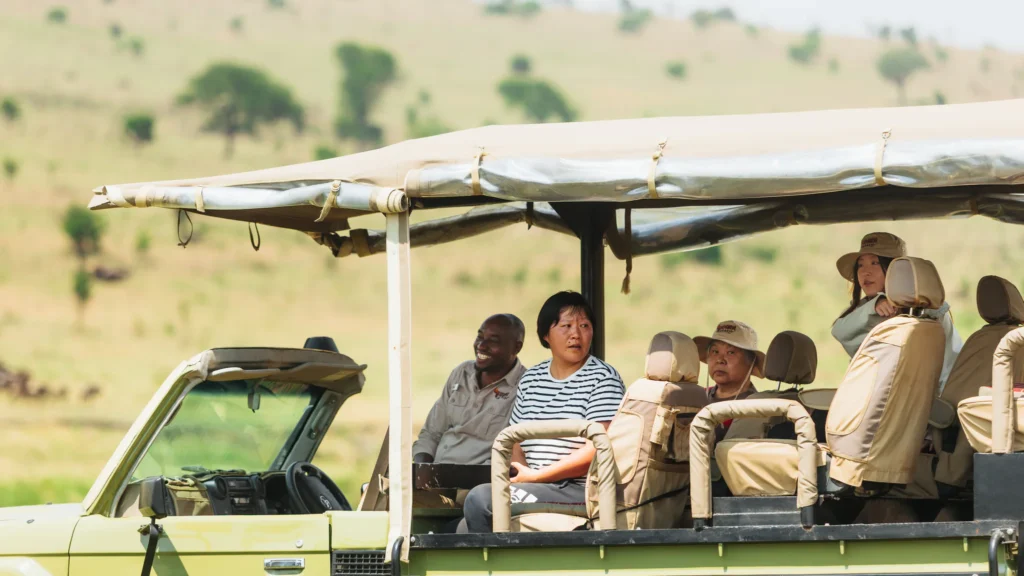
Everything begins here. The classic game drive — your guide at the wheel of a 4WD with the roof open to the sky, moving quietly through the bush in the early morning light — is the heartbeat of every Tanzania safari. It is never routine, never predictable, and never, not once, boring.
Tanzania’s parks offer some of the most concentrated and diverse wildlife on the African continent. The Serengeti National Park is home to the Big Five — lion, leopard, elephant, buffalo, and rhino — alongside cheetah, wild dog, hyena, and millions of plains animals. The Ngorongoro Crater, a collapsed volcanic caldera, traps an astonishing density of wildlife in a single bowl of ancient earth. Tarangire National Park is legendary for its elephant herds — sometimes hundreds strong — moving through baobab-studded landscape in the dry season.
Further south, Ruaha National Park offers a wilder, more elemental game drive experience — fewer vehicles, larger lion prides, and a sense of genuine wilderness that the more-visited northern parks cannot always provide. The Selous Game Reserve is one of Africa’s largest protected areas and combines game drives with boat safaris for a truly multi-dimensional wildlife experience.
Do not overlook Lake Manyara National Park — compact but consistently remarkable, famous for its tree-climbing lions, vast flocks of flamingos, and forests of giant fig trees that frame the lakeshore in extraordinary light.
2. Witness the Great Migration
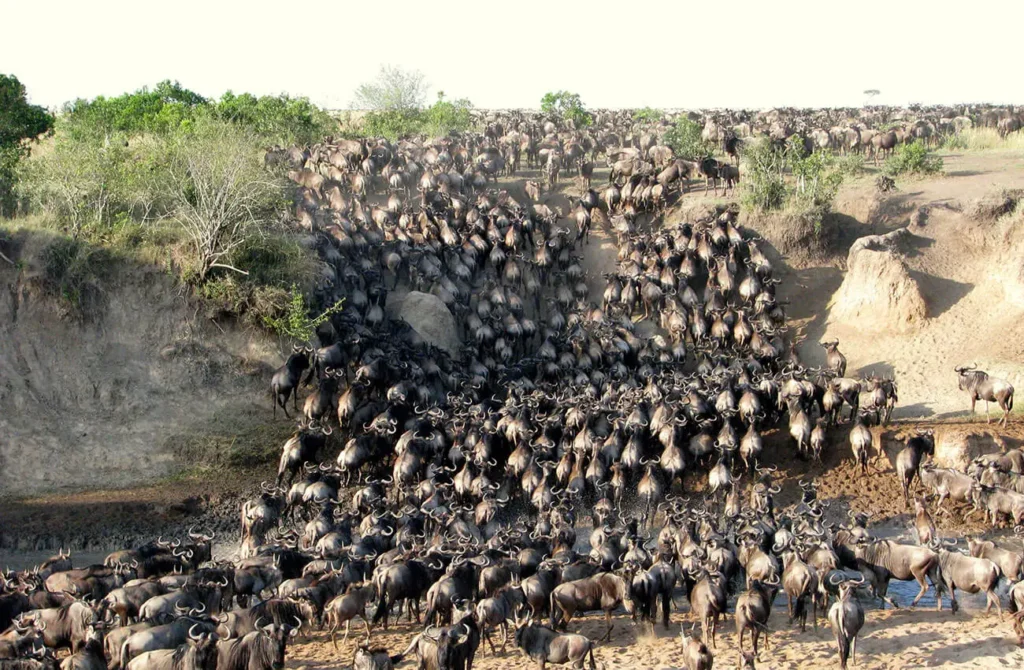
There are wildlife spectacles, and then there is the Great Migration. No superlative fully captures it. Approximately 1.5 million wildebeest, joined by hundreds of thousands of zebra and gazelle, move in a continuous circuit across the Serengeti ecosystem and into Kenya’s Masai Mara — following rainfall and fresh grazing in one of nature’s most ancient and awe-inspiring patterns.
The river crossings, which occur primarily between July and October as the herds push northward across the Mara and Grumeti rivers, are the most dramatic chapter of the story. The animals mass on the banks for hours — sometimes days — before the first wildebeest plunges in and the rest follow in a thundering, terrified wave. Crocodiles wait below the surface. Lions and cheetah wait on the far bank. It is raw, unfiltered nature at its most overwhelming.
Our Great Migration safari is built specifically to position you in the right place at the right time — in the northern Serengeti during the crossing season, with guides who read the herds’ movement and know exactly where to be. If this is the experience that brought you to Tanzania, let us take you there properly.
3. Float Above the Serengeti in a Hot Air Balloon
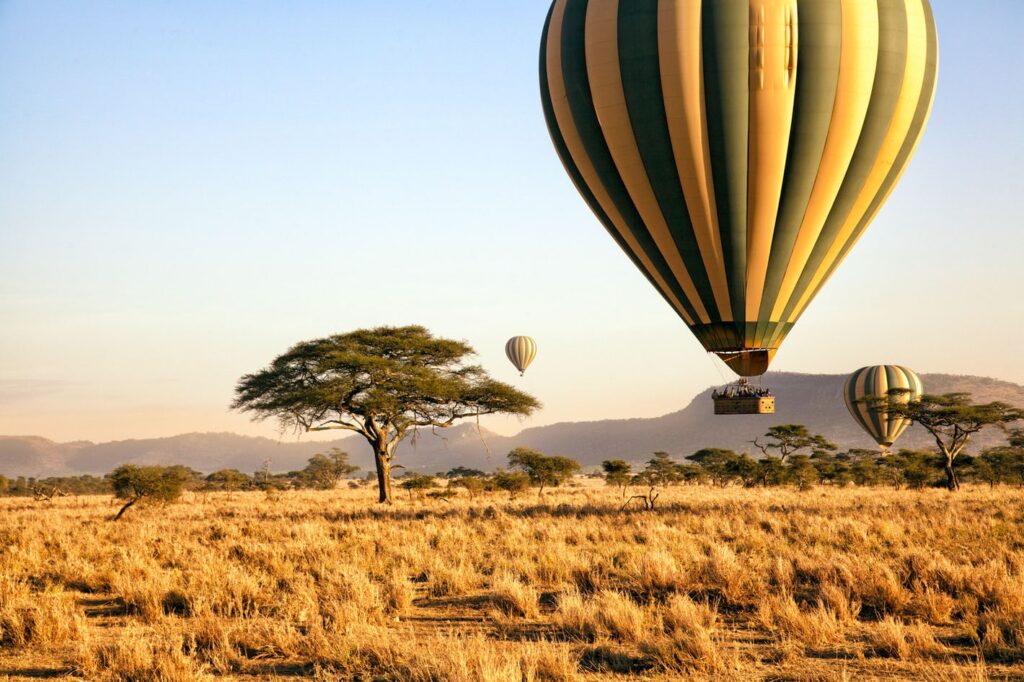
An hour before sunrise, you stand in the darkness of the Serengeti as the balloon is inflated above you in a roar of flame. You climb into the basket, the ground falls away beneath you, and silence takes over — the most profound silence you may ever experience, suspended between the stars and the waking plains below.
A balloon safari over the Serengeti is one of the finest single hours in all of travel. As the sun rises, it lights the landscape in shades of gold and amber, and the animals below — elephant, giraffe, lion, wildebeest — move across the plains in miniature. Your pilot drifts low over river bends and kopjes, rises to catch a thermal, and tracks the herds from above with a vantage point no game drive can offer.
The flight ends with a champagne breakfast served in the bush — the balloon laid out behind you, the Serengeti stretching to the horizon in every direction. It is the kind of morning that stays with you for the rest of your life.
4. Walk the Bush on a Walking Safari
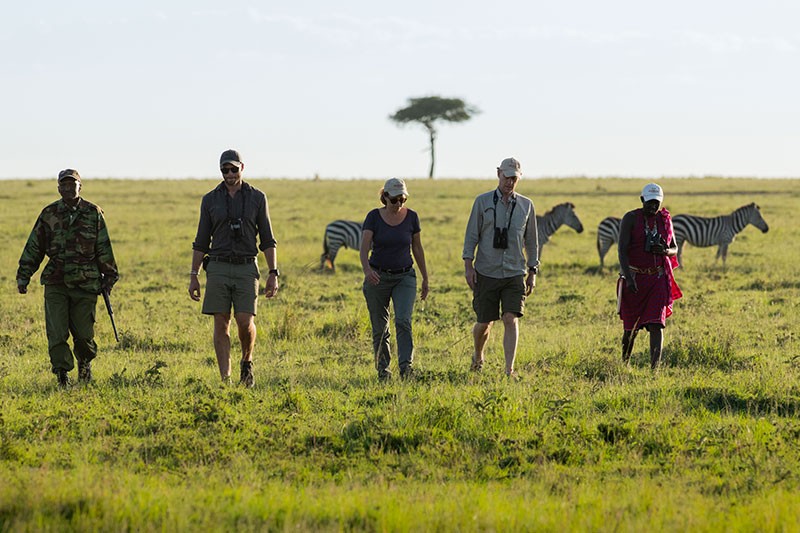
Remove the vehicle. Put your feet on the ground. Let your guide lead you into the bush at a pace that allows you to see, smell, and hear everything the game drive cannot offer. A walking safari changes your relationship with the African wilderness completely.
On foot, your senses sharpen in ways that sitting in a vehicle never demands. The crack of a twig becomes significant. The direction of the wind matters. You read animal tracks in the dust, identify bird calls by ear, and understand the landscape as a living system rather than a backdrop. It is slower, more deliberate, and more intimate than any other form of safari — and for many travellers, it becomes the experience they talk about most.
Walking safaris are available in the Serengeti’s private conservancies, in Ruaha, and in the Selous. All are led by armed, highly trained professional guides. The Selous in particular is one of East Africa’s finest walking safari destinations — vast, wild, and rarely crowded.
5. Climb Mount Kilimanjaro
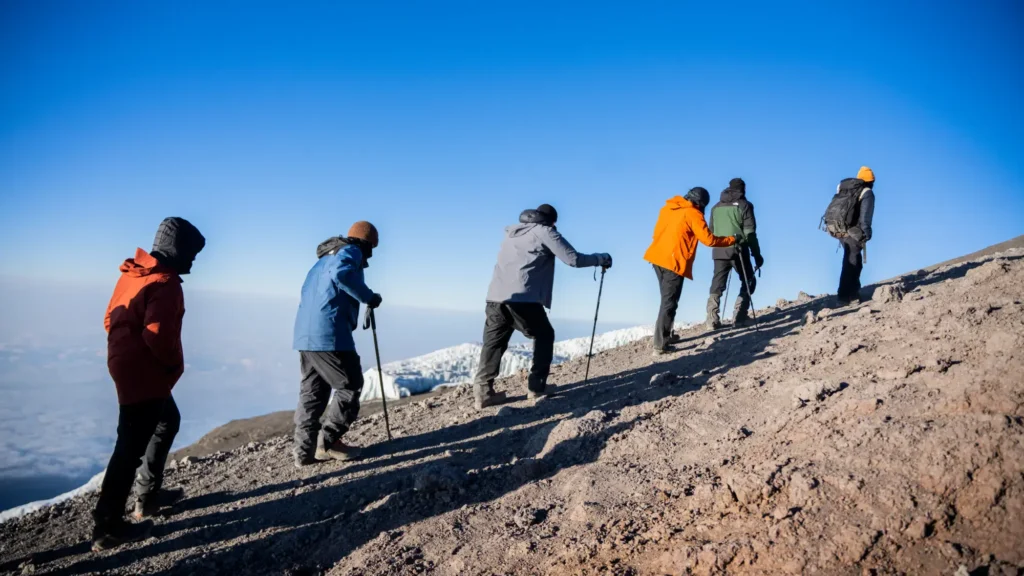
At 5,895 metres, Kilimanjaro is the highest free-standing mountain on Earth and Africa’s undisputed rooftop. Standing at Uhuru Peak as the sun rises over a carpet of cloud is one of the most profound physical and emotional experiences a human being can have — and it is accessible to any fit, determined traveller who prepares properly and chooses the right route.
We offer guided climbs on all of Kilimanjaro’s major routes, each with its own character and challenge:
| Route | Duration | Difficulty | Highlights | Best For |
|---|---|---|---|---|
| Marangu Route | 5 – 6 days | Moderate | Hut accommodation; the “Coca-Cola” route; most accessible | First-time climbers; those preferring hut sleeping |
| Machame Route | 6 – 7 days | Moderate – Challenging | Scenic and varied; excellent acclimatisation profile | Most popular overall; trekkers who want scenery |
| Lemosho Route | 7 – 8 days | Moderate – Challenging | Most scenic; excellent acclimatisation; quiet western approach | Those wanting the best all-round experience |
| Rongai Route | 6 – 7 days | Moderate | Remote northern approach; fewer crowds; dry conditions | Those seeking solitude; dry season climbers |
| Northern Circuit Route | 9 – 10 days | Moderate (best acclimatisation) | Longest route; finest views; highest summit success rate | Those prioritising summit success; experienced trekkers |
| Umbwe Route | 6 – 7 days | Challenging | Steep and direct; very quiet; dramatic forest section | Experienced, fit trekkers seeking a challenge |
| Shira Route | 7 – 8 days | Moderate – Challenging | High-altitude start on the Shira Plateau | Experienced climbers; those joining at altitude |
| Western Breach Route | 7 – 8 days | Challenging – Strenuous | Direct crater rim approach; dramatic and technical | Experienced, technically confident climbers |
All climbs include professional guides, experienced porters, all meals, camping equipment, and park fees. Many of our guests combine a Kilimanjaro climb with a post-summit safari — transitioning from glacial summit to golden savannah in a single extraordinary trip. Explore all our Kilimanjaro options here.
6. Relax and Explore Zanzibar
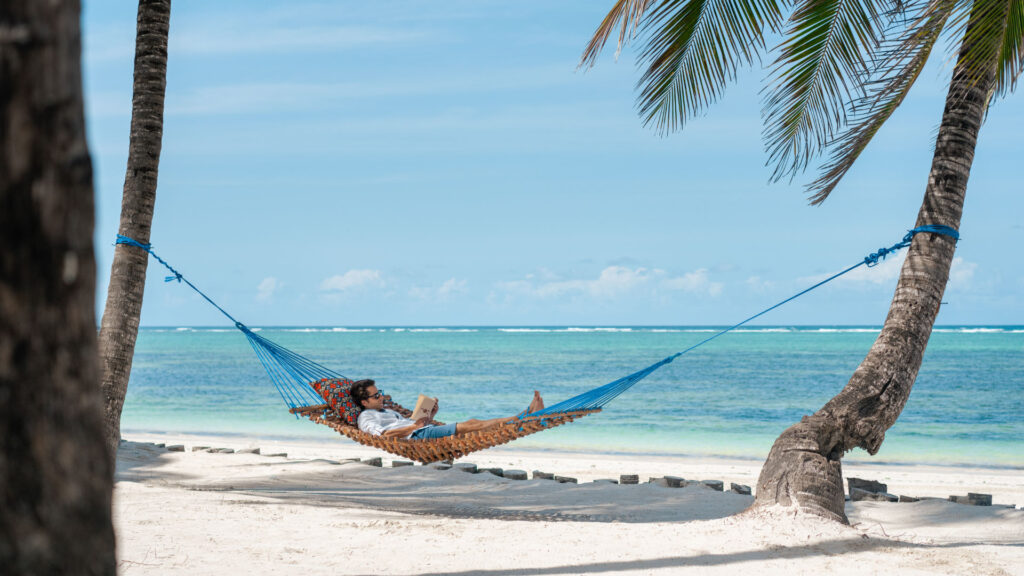
After the dust and drama of the bush, Zanzibar’s white sand beaches feel like the world exhaling. The island sits just off the Tanzanian coast in the Indian Ocean — a place of turquoise water, centuries of Swahili-Arab-Portuguese history, clove plantations, and seafood so fresh it was in the ocean that morning.
Stone Town, Zanzibar’s UNESCO-listed old city, is a labyrinth of narrow coral stone lanes, carved wooden doors, rooftop terraces, and spice market aromas that have defined this island’s identity for a thousand years. Spend a morning getting deliberately lost in it. Visit the former slave market. Eat grilled octopus at the Forodhani night market as the sun drops into the sea.
The beaches of the north and east coast — Nungwi, Kendwa, Paje, Matemwe — offer world-class snorkelling, diving, kite-surfing, and the kind of turquoise water that looks digitally enhanced until you are actually swimming in it.
Most of our guests add three to five days in Zanzibar at the end of their safari. It is the perfect landing — a soft, sun-soaked decompression after the intensity of the bush.
7. Experience a Cultural Safari
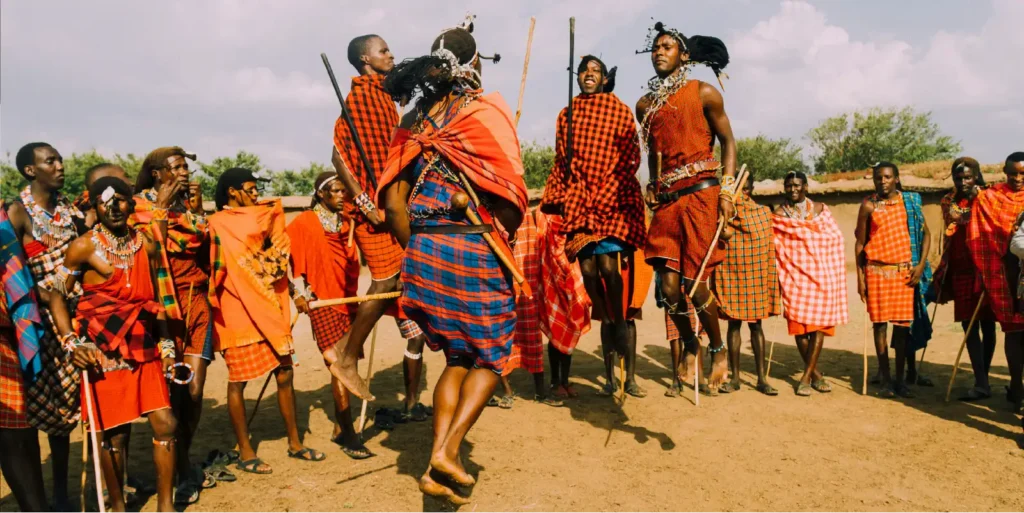
Tanzania is home to more than 120 ethnic groups, each with its own language, traditions, and way of understanding the world. A cultural safari takes you beyond the wildlife and into the human story of this remarkable country — and it changes the way you understand everything else you see.
A visit to a Maasai community in the Ngorongoro region is the experience most travellers encounter first — and it is genuinely moving when done with care and respect. The Maasai are a pastoral people who have coexisted with Tanzania’s wildlife for centuries, and their knowledge of the land, its animals, and its seasons is as deep as any ecologist’s. Sitting with a Maasai elder at dusk, listening to the cattle bells and the quiet conversation of a community settling in for the night, is something no game drive can replicate.
Cultural experiences can also be woven into visits to Lake Manyara, the slopes of Kilimanjaro (where the Chagga people maintain rich farming communities), and the fishing villages of the Selous region. We design cultural components thoughtfully — ensuring visits are genuine, respectful, and beneficial to the communities involved.
8. Go on a Photographic Safari
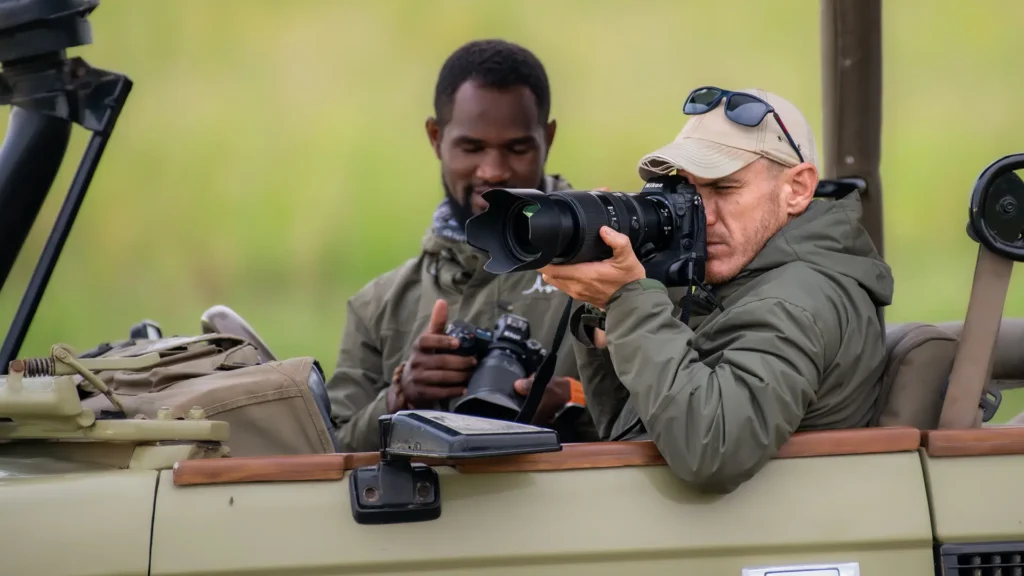
Tanzania is one of the world’s great photographic destinations — and not just because the wildlife is extraordinary. The light here does something remarkable. In the golden hours at either end of the day, the savannah glows in tones that no filter can replicate, and the animals move through it like something from a dream.
Our photographic safari is designed specifically for those who want to bring home more than memories. Vehicles are positioned for optimal light angles. Game drives begin before dawn and extend after dusk to capture the hours when the light is finest and the animals most active. Our guides understand photography — they know what you’re trying to capture before you say it, and they position you to capture it.
The wildebeest calving season (January to February in the southern Serengeti) and the river crossings (July to October in the north) are the two peak photographic events in the Tanzania calendar. The Ngorongoro Crater offers extraordinary portrait opportunities — predators at close range, elephants against the ancient crater walls, flamingos in the soda lake at the crater floor.
9. Plan a Family Safari
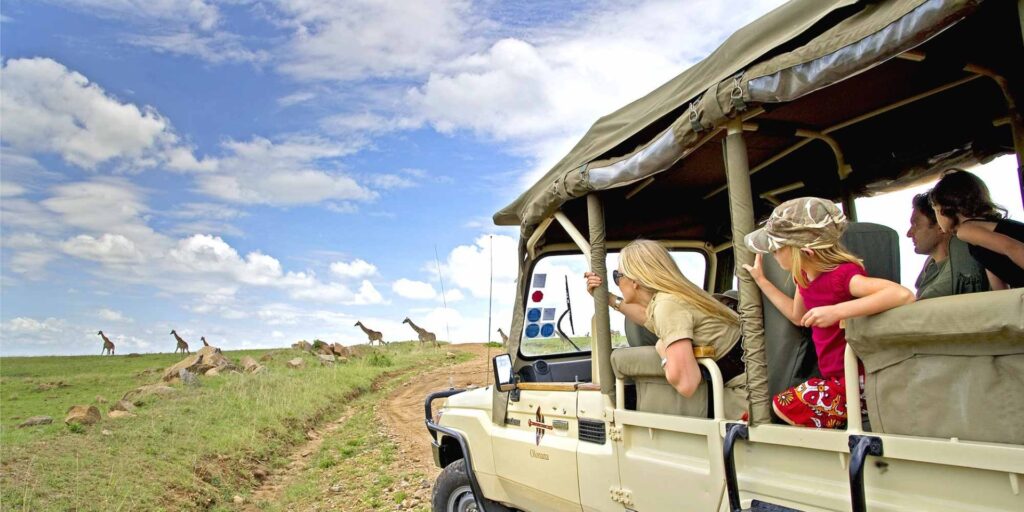
Tanzania is a magnificent family destination — and children who experience it rarely forget it. A family safari with Northern Masailand Safaris is designed around the rhythms and needs of travelling with young people: flexible scheduling, age-appropriate wildlife interpretation, camps with family accommodation, and guides who know how to make the bush come alive for a curious eight-year-old.
Tarangire National Park is an excellent choice for families — the elephant herds are spectacular, the landscape is dramatic, and the park is relaxed in a way that suits a family pace. Ngorongoro is similarly family-friendly, with its compact geography making wildlife sightings almost guaranteed. Adding Zanzibar at the end gives everyone — children included — time to swim, snorkel, and decompress.
10. Celebrate a Honeymoon in the Bush
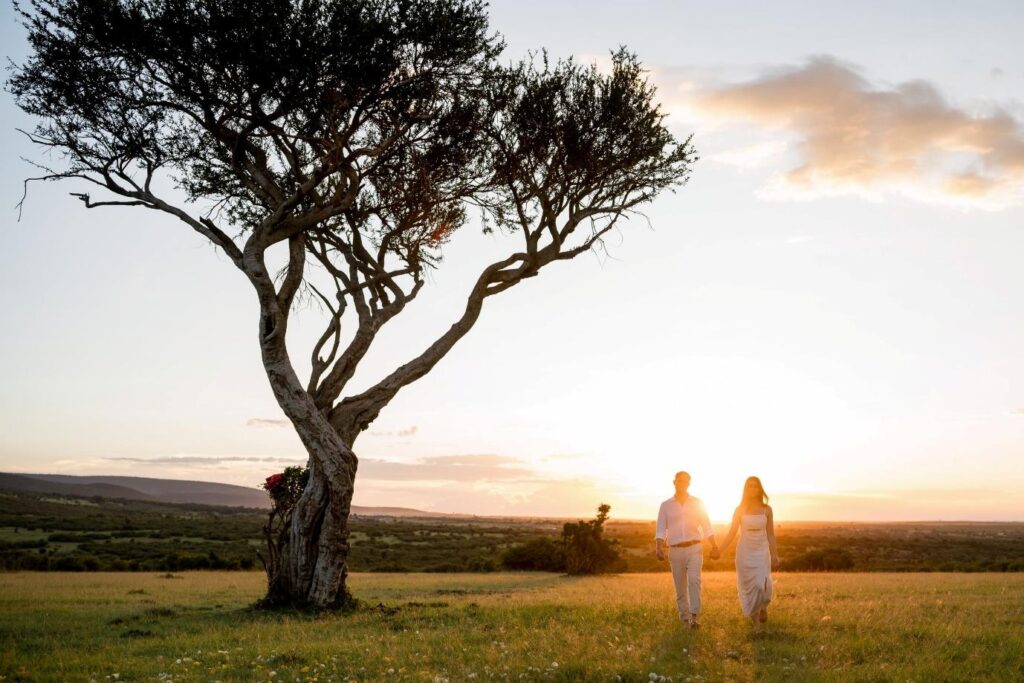
There is no more romantic backdrop on earth than the African bush at night — a fire burning low, the sound of the Serengeti all around you, and the stars overhead in a density that city life never allows. A honeymoon safari in Tanzania is not a compromise on luxury or romance — it is one of the world’s finest settings for both.
We design honeymoon itineraries that balance genuine wildlife experience with intimacy and indulgence — private game drives with just the two of you, candlelit dinners under the stars, luxury lodges with private plunge pools overlooking the plains, and a few final days unwinding on the powder-sand beaches of Zanzibar. It is the kind of beginning to a marriage that people describe for decades.
11. Trek for Gorillas in Uganda or Rwanda
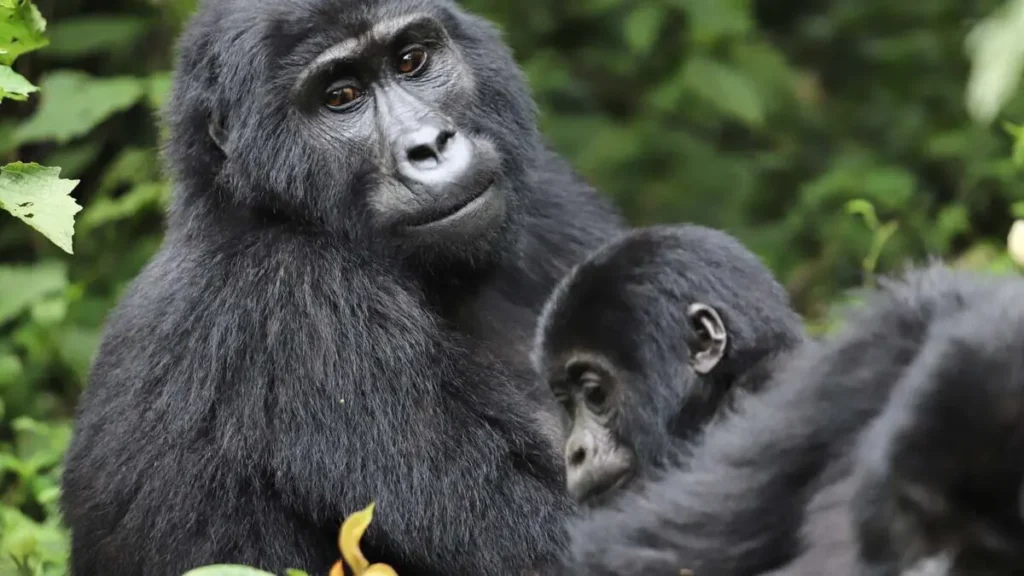
For travellers extending their East Africa journey beyond Tanzania, gorilla trekking is the experience that sits at the very top of every wildlife wish list. Mountain gorillas — critically endangered and numbering fewer than 1,100 in the wild — exist only in the highland forests of Uganda, Rwanda, and the Democratic Republic of Congo.
Spending an hour with a habituated gorilla family in the mist of Bwindi Impenetrable National Park in Uganda, or in the bamboo forests of Volcanoes National Park in Rwanda, is consistently described by those who have done it as the most profound wildlife encounter of their lives. The eye contact alone — between a silverback and a human, across millions of years of shared evolution — is something that stays with you forever.
We organise gorilla trekking permits, logistics, and full itineraries for both Uganda and Rwanda, often combined with a Tanzania safari into a single seamless East Africa journey. Talk to our team about building your multi-country adventure.
12. Explore Kenya’s Masai Mara
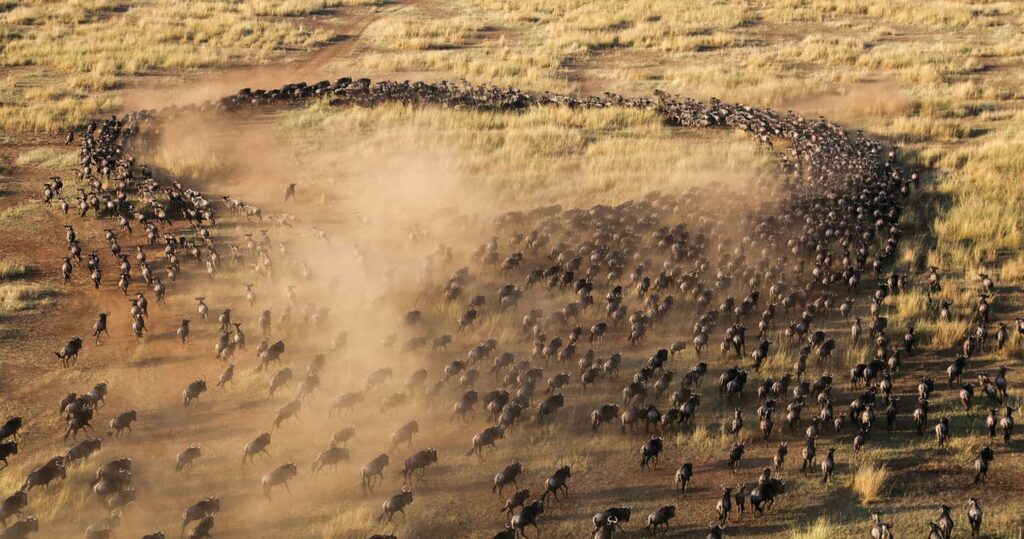
Just across Tanzania’s northern border, Kenya’s Masai Mara National Reserve forms the northern half of the greater Serengeti ecosystem. During the Great Migration, the wildebeest cross the Mara River here in scenes of extraordinary drama — and the Mara’s resident wildlife, including some of Africa’s most famous lion prides, is exceptional year-round.
A combined Tanzania–Kenya itinerary — moving from the Serengeti into the Mara or vice versa — is one of the great wildlife journeys on Earth. We handle all cross-border logistics, so the only thing you experience is the seamless transition from one extraordinary landscape to another.
Tanzania by Experience Type
| If You Want… | Do This | Best Destination(s) |
|---|---|---|
| The ultimate wildlife spectacle | Great Migration Safari | Northern Serengeti, July – October |
| A physical challenge and achievement | Kilimanjaro Climb | Kilimanjaro National Park |
| Romance and intimacy | Honeymoon Safari + Zanzibar | Serengeti, Ngorongoro, Zanzibar |
| The best photographs of your life | Photographic Safari | Serengeti, Ngorongoro, Tarangire |
| Adventure beyond the vehicle | Walking Safari or Adventure Safari | Ruaha, Selous, Serengeti conservancies |
| An experience for the whole family | Family Safari | Tarangire, Ngorongoro, Serengeti |
| A view unlike any other | Balloon Safari | Serengeti National Park |
| Cultural depth and human connection | Cultural Safari | Ngorongoro region, Kilimanjaro slopes |
| The most profound wildlife encounter | Gorilla Trekking | Bwindi (Uganda), Volcanoes NP (Rwanda) |
| Sun, sea, and total relaxation | Zanzibar Beach Extension | Zanzibar Island |
Combining Experiences: Sample Tanzania Itineraries
The best Tanzania trips don’t choose just one experience — they layer them. Here are a few combinations that our guests have loved most:
| Itinerary | Duration | Highlights |
|---|---|---|
| Classic Northern Circuit | 6 – 8 days | Tarangire, Serengeti, Ngorongoro — the essential Tanzania safari experience |
| Northern Circuit + Zanzibar | 9 – 12 days | Safari + beach; the most popular combination for first-time visitors |
| Kilimanjaro + Safari | 12 – 16 days | Summit Africa’s highest peak then descend to the Serengeti plains |
| Great Migration + Masai Mara | 8 – 10 days | Follow the herds across Tanzania and into Kenya; July – October |
| Southern Circuit Wilderness | 7 – 10 days | Ruaha, Selous — fewer visitors, extraordinary wildlife, walking safaris |
| Ultimate East Africa | 14 – 21 days | Tanzania safari + Kilimanjaro + gorilla trekking in Uganda or Rwanda |
| Honeymoon Signature | 10 – 14 days | Luxury Serengeti + Ngorongoro + Zanzibar beaches + balloon at sunrise |
Every itinerary we create at Northern Masailand Safaris is built from scratch around you — your pace, your interests, your budget, and the moments you most want to experience. There is no catalogue to choose from and no standard package to fit yourself into.
Start Planning Your Tanzania Adventure
Tanzania rewards those who come with curiosity, openness, and a willingness to be surprised. Whether you arrive knowing exactly what you want or with only a vague sense that this country is somewhere you need to be, we will help you find the experience that fits you perfectly.
We are a locally owned and operated company based in northern Tanzania. Our guides grew up in these landscapes. Our network spans Tanzania, Kenya, Uganda, and Rwanda. And our commitment is to give every guest not just a great safari, but the right safari — the one that matches who they are and what they came here to find.
Visit our trip planning page to begin, explore our FAQ page for practical guidance, or simply reach out to our team. We would love to start building something extraordinary with you.
Tanzania is not a place you visit once and feel you’ve seen it. It is a place that calls you back, again and again, with something new every time. Come and find out why.