It’s one of the first questions we hear from first-time visitors, and it deserves an honest answer: Is Tanzania safe to travel to?
The short answer is yes — Tanzania is one of the safest travel destinations in Africa, and millions of visitors explore its plains, mountains, and coastline every year without incident. But “safe” is not the same as “without risk,” and any country on Earth deserves a thoughtful, informed approach rather than blind reassurance.
At Northern Masailand Safaris, we live and work here. Tanzania is our home. We want every traveller who arrives through our doors to feel not just comfortable, but genuinely well-prepared — because the best safari is one where your mind is completely free to absorb the wonder in front of you, not worrying about things that a little preparation would have put to rest.
This is our honest guide to Tanzania travel safety. Read it, use it, and then come and let us show you what this extraordinary country is made of.
Tanzania’s Overall Safety Record
Tanzania has maintained a long, consistent record of political stability and peaceful governance in a region where that is not always guaranteed. The country has held democratic elections since 1992, and major tourist areas — including the Northern Circuit safari parks, Zanzibar, and Kilimanjaro — have not experienced significant security incidents affecting visitors.
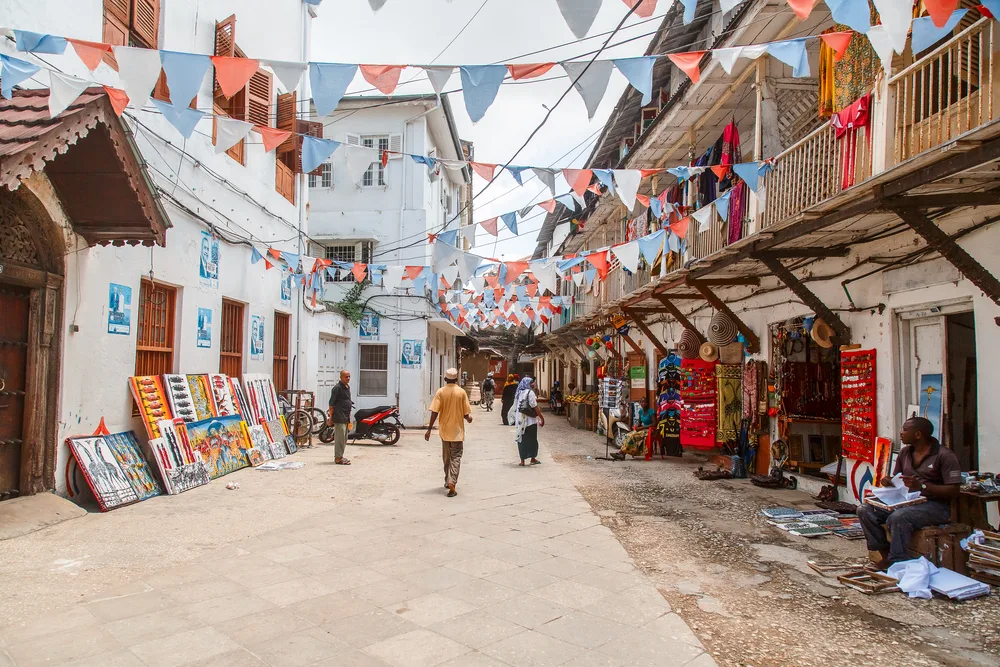
Violent crime against tourists is rare. Petty theft — pickpocketing, bag-snatching, opportunistic theft from vehicles — is a more realistic concern in busy urban areas like Dar es Salaam and Arusha, as it is in any major city anywhere in the world. With basic street awareness and a few sensible habits, most travellers navigate Tanzania’s cities without any problems at all.
Once you leave the cities and enter the national parks — the Serengeti, Ngorongoro Crater, Tarangire, Ruaha, and beyond — you are in one of the safest environments imaginable. The parks are well-managed, access is controlled, and your time is spent entirely within a structured, guided framework.
Health and Medical Safety
Health is where Tanzania travel safety requires the most active preparation. The country lies in a tropical zone and carries certain health risks that are entirely manageable with the right precautions taken well before you travel.

Malaria
Malaria is present throughout Tanzania, including in the national parks. It is the most important health consideration for Tanzania visitors and should be taken seriously. That said, it is preventable — and travellers who take appropriate precautions face a very low risk.
- Consult your doctor or travel health clinic at least 6–8 weeks before departure to discuss anti-malarial prophylaxis. Common options include Malarone, Doxycycline, and Mefloquine — your doctor will advise on the best fit for your health profile
- Use a quality DEET-based insect repellent every evening and early morning, when mosquitoes are most active
- Sleep under a mosquito net — provided as standard in all quality lodges and camps
- Wear long sleeves and long trousers after dusk. Light-coloured clothing helps you spot mosquitoes before they bite
The risk varies by altitude: the higher you go, the lower the malaria risk. The summit of Kilimanjaro and the rim of the Ngorongoro Crater carry minimal malaria risk due to altitude and cool temperatures. The lowland parks — Selous, Katavi, and coastal areas — carry a higher risk and warrant more careful attention.
Yellow Fever
Tanzania requires proof of Yellow Fever vaccination if you are travelling from a country where Yellow Fever is endemic. Even where it is not technically required, many travel health professionals recommend vaccination as standard for sub-Saharan Africa. Carry your International Certificate of Vaccination (the yellow card) with your travel documents — it may be checked at entry.
Other Vaccinations
Speak to your travel clinic about the following, which are generally recommended for Tanzania:
- Hepatitis A and B
- Typhoid
- Tetanus, diphtheria, and polio (standard boosters)
- Rabies — recommended if spending extended time in rural areas or involved in animal contact
- Meningococcal meningitis — worth discussing with your doctor
Food and Water Safety

Tap water in Tanzania is not safe to drink. Stick exclusively to bottled or filtered water — provided as standard by all reputable safari camps and lodges. Avoid ice in drinks outside of trusted establishments, and be cautious with raw vegetables and salads at roadside stalls.
All meals provided by Northern Masailand Safaris — whether in camp, at a lodge, or in packed lunches during game drives — meet rigorous food safety standards. This is something we take extremely seriously.
Altitude
For Kilimanjaro climbers, altitude sickness is the primary health concern — not wildlife, not crime. Acute Mountain Sickness (AMS) affects a significant proportion of climbers and should not be underestimated. Choosing a longer route with better acclimatisation — such as the Lemosho Route, Northern Circuit Route, or Machame Route — significantly improves both safety and summit success rates. Our guides carry supplemental oxygen and are trained in altitude sickness recognition and response on every climb.
Visit our FAQ page for more detail on health preparation and what to expect on safari.
Wildlife Safety: The Rules That Keep You Safe
This is the area of Tanzania travel safety that visitors most frequently ask about — and it is the area where a quality operator makes all the difference.
Tanzania’s wildlife is wild. Lions, elephants, buffalo, hippos, and crocodiles are genuinely dangerous animals. They are not tame, they are not predictable, and the bush demands respect. But here is the important truth: in well over a century of organised safari tourism in East Africa, wildlife-related incidents involving tourists on guided safaris are extraordinarily rare. The rules that govern safari behaviour exist precisely because they work.
In the Vehicle
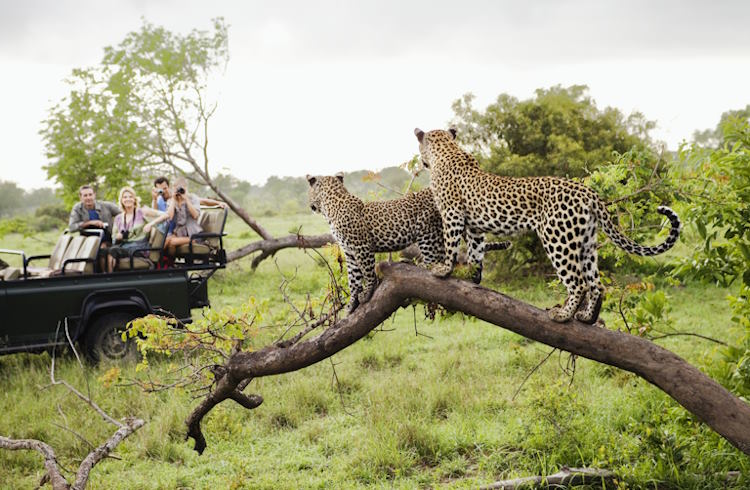
- Stay inside the vehicle at all times during game drives unless your guide explicitly instructs otherwise. Animals recognise the vehicle as a single, non-threatening entity — the moment a human silhouette appears outside it, that changes
- Keep voices low and movements calm near wildlife. Sudden sounds and movements are startling to animals and can change a peaceful scene very quickly
- Never feed wildlife. This is both illegal and genuinely dangerous — it habituates animals to human contact in ways that ultimately harm them and endanger future visitors
- Follow your guide’s instructions without hesitation. Our guides read animal behaviour at a level that takes years of experience to develop. When they say move, move
At Camp and on Foot
- Never walk outside camp boundaries alone at night. Staff members accompany guests between tents and the dining area after dark as a matter of course
- Keep tent zips fully closed at all times. Small animals — and occasionally larger ones — investigate open tents out of curiosity
- On walking safaris, follow your armed guide’s instructions precisely. Walking in the bush with a trained guide is extraordinarily safe; walking alone is not
- Hippos and crocodiles make rivers and lake edges dangerous after dark. Keep a respectful distance from water at all times outside of boat safari contexts
Our guides are among the most experienced in northern Tanzania. They are trained in wildlife behaviour, first aid, and emergency response — and they take the safety of every guest in their vehicle as a personal responsibility.
Road and Transport Safety
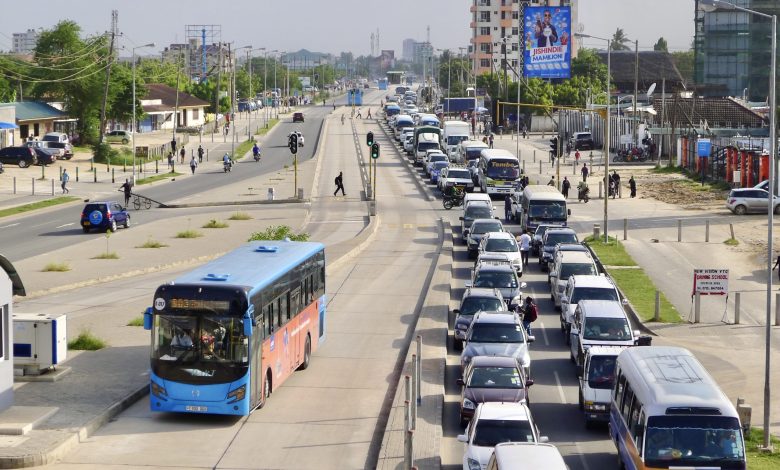
Road safety is a genuine consideration in Tanzania and one we address directly in how we operate. Tanzanian roads vary significantly in quality — main highways connecting major tourist hubs have improved substantially, but dirt roads into remote parks can be challenging, particularly after rain.
Our safari vehicles are well-maintained, regularly serviced 4WD vehicles specifically suited to the conditions in each park. We do not use old, inadequately maintained vehicles — something that is unfortunately not true of every operator in the region.
For transfers between distant destinations — particularly combinations that include the southern circuit parks like Ruaha or Katavi — we recommend light aircraft transfers where possible. Flying between parks is not only faster and more comfortable; it is also safer than long overland drives on remote roads and allows you to see Tanzania’s landscapes from an entirely different perspective.
If you’re extending your safari into Kenya, Uganda, or Rwanda, we handle all cross-border transfers and logistics seamlessly — so you never navigate border crossings or unfamiliar road networks alone.
Personal Safety in Cities and Towns
Most visitors to Tanzania arrive through Kilimanjaro International Airport (near Arusha) or Julius Nyerere International Airport in Dar es Salaam. Arusha, our home base, is a lively, welcoming city and the gateway to Tanzania’s Northern Circuit. Like any city, it deserves sensible street awareness.
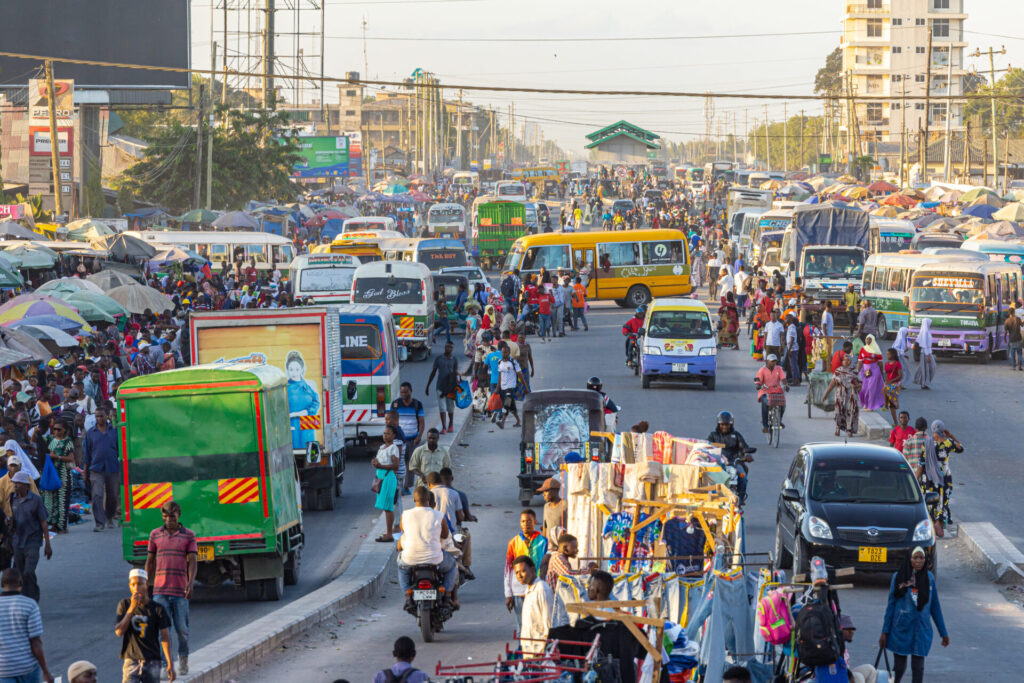
Practical urban safety tips:
- Use reputable, pre-arranged transport rather than hailing random taxis on the street. We arrange all airport transfers for our guests as a matter of course
- Keep valuables out of sight — phones, cameras, and jewellery attract attention in busy markets and bus stations
- Use a money belt or hidden pouch for your passport, cards, and large amounts of cash
- Avoid walking alone at night in unfamiliar areas of any city
- Be cautious on beaches — isolated stretches of coastline can attract opportunistic theft. Zanzibar’s main resort beaches are well-patrolled, but common sense prevails
- Avoid displaying expensive equipment conspicuously in markets and crowded areas
Our guests spend the vast majority of their Tanzania time in the national parks — away from urban risks entirely. For those spending time in Arusha before or after their safari, we are always happy to provide specific, current local advice.
LGBTQ+ Travel Safety
Tanzania has conservative laws regarding same-sex relationships, and LGBTQ+ travellers should be aware that public displays of affection between same-sex couples can attract unwanted attention and carry legal risk, particularly outside of major cities and tourist areas. Zanzibar operates under a separate legal jurisdiction and is particularly conservative in this regard.
In practice, LGBTQ+ visitors to Tanzania who exercise discretion — as they would in any conservative country — travel without incident. The safari environment, with its focus entirely on wildlife and nature, is not a context where personal relationships become visible or relevant in any way.
We welcome all travellers at Northern Masailand Safaris, without exception. If you have specific questions or concerns, please reach out to us directly — we are always happy to give you honest, current, and personal guidance.
Travel Insurance: Non-Negotiable
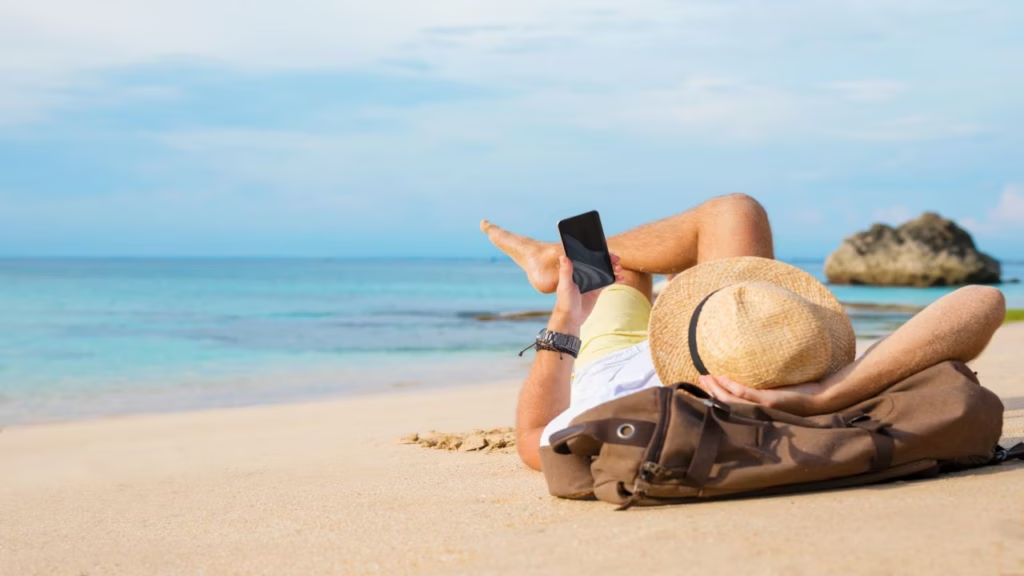
If there is one safety measure that is truly non-negotiable for Tanzania travel, it is comprehensive travel insurance that includes medical evacuation cover. This is not optional. It is essential.
Tanzania’s remote safari areas are, by definition, far from major medical facilities. If a serious medical emergency occurred in a park like Katavi or the southern reaches of the Selous, evacuation to a properly equipped hospital in Arusha, Nairobi, or beyond could cost tens of thousands of dollars without insurance. With it, a single phone call sets everything in motion.
AMREF Flying Doctors and other emergency evacuation services operate across East Africa and respond rapidly. We recommend all our guests carry insurance that specifically names emergency medical evacuation as a covered benefit. Budget approximately $100–$200 per person for a comprehensive policy and consider it one of the most important items on your pre-departure checklist.
Emergency Contacts and Preparation
Good preparation is the foundation of safe travel. Before you depart, make sure you have the following in order:
- Your Northern Masailand Safaris emergency contact number — we provide this to every guest before travel and our team is reachable at all hours
- Your country’s embassy or high commission contact in Tanzania — find this on your government’s travel advice website
- Your travel insurance emergency line — stored in your phone, not just on paper
- Copies of all documents — passport, visa, insurance, Yellow Fever certificate — stored separately from originals and in a secure cloud folder
- Your government’s travel advisory page — check it before departure for the most current guidance. Tanzania consistently receives “exercise normal safety precautions” or equivalent ratings from most Western governments
Our FAQ page contains a detailed pre-departure checklist and answers the most common safety-related questions we receive from guests.
Safety Across Tanzania’s Regions
Tanzania is a large and varied country, and safety considerations differ by region. Here is a brief, honest overview of the areas most relevant to our travellers:
- Serengeti and Northern Circuit parks: Extremely safe. Well-managed, heavily visited, with excellent park infrastructure and ranger presence
- Ngorongoro Crater and highlands: Very safe. High altitude, cool temperatures, and a tightly controlled conservation area
- Arusha and Kilimanjaro region: Generally safe with standard urban precautions. Our home base and the heart of the northern safari circuit
- Southern circuit (Ruaha, Selous): Very safe within the parks. More remote, which reinforces the importance of good insurance and a reliable operator
- Zanzibar: Safe for tourists in resort areas. Standard beach destination precautions apply. Conservative culture deserves respectful awareness
- Tanzania–Kenya border region: The crossing to the Masai Mara is well-established and routine. We handle all border logistics for guests on combined itineraries
The Safest Way to Experience Tanzania
The single most effective safety measure for any Tanzania safari is travelling with a reputable, experienced, locally based operator. This is not marketing — it is simply true.
When you travel with Northern Masailand Safaris, you are never navigating an unfamiliar country alone. Our guides know the parks, the roads, the animals, and the emergency protocols. Our team in Arusha is reachable throughout your trip. Our vehicles are maintained to a standard that keeps you moving safely. And our experience across Tanzania, Kenya, Uganda, and Rwanda means we’ve seen and managed every situation that travel in East Africa can present.
Tanzania rewards travellers who come prepared and travel wisely. It is a country of staggering, humbling beauty — and the peace of mind that comes from knowing you’re in safe, experienced hands is what allows you to be fully present for every moment of it.
Whether you’re drawn to a family safari with young children, a honeymoon in the bush, a challenging Kilimanjaro climb, or a walking safari through the wilderness — we will take care of you, every step of the way.
Have safety questions specific to your itinerary? Contact our team directly — we answer every question honestly and in full. You can also explore our FAQ page for detailed pre-departure guidance, or start planning your trip with us today.