Climbing Kilimanjaro means walking through four completely different climates in a matter of days. You’ll start in tropical warmth, pass through mist and rain, trek across a barren moorland, cross an arctic desert, and finally stand on a glaciated summit where temperatures can plunge to -20°C. Understanding exactly what temperatures await you — and preparing for them — is one of the most important steps you can take before your climb.
At Northern MasaiLand Safaris, we’ve guided climbers to the top of Mount Kilimanjaro across every season and every route. Temperature surprises are one of the most common reasons climbers struggle — not because the cold is unmanageable, but because they didn’t pack or layer correctly. This guide fixes that.
Why Kilimanjaro Has So Many Different Temperatures
At 5,895 metres, Kilimanjaro is the highest freestanding mountain in the world. What makes it truly unique is its location — sitting almost exactly on the equator, just 3 degrees south. This means the mountain doesn’t experience the same seasonal extremes as mountains at higher latitudes. Instead, temperature on Kilimanjaro is almost entirely determined by altitude, not season.
As you gain elevation, the air temperature drops by roughly 6.5°C for every 1,000 metres. That means by the time you reach Uhuru Peak, you’ve effectively travelled from the tropics to the Arctic — all on foot, in under a week.
Kilimanjaro’s Five Climatic Zones — Temperature by Zone
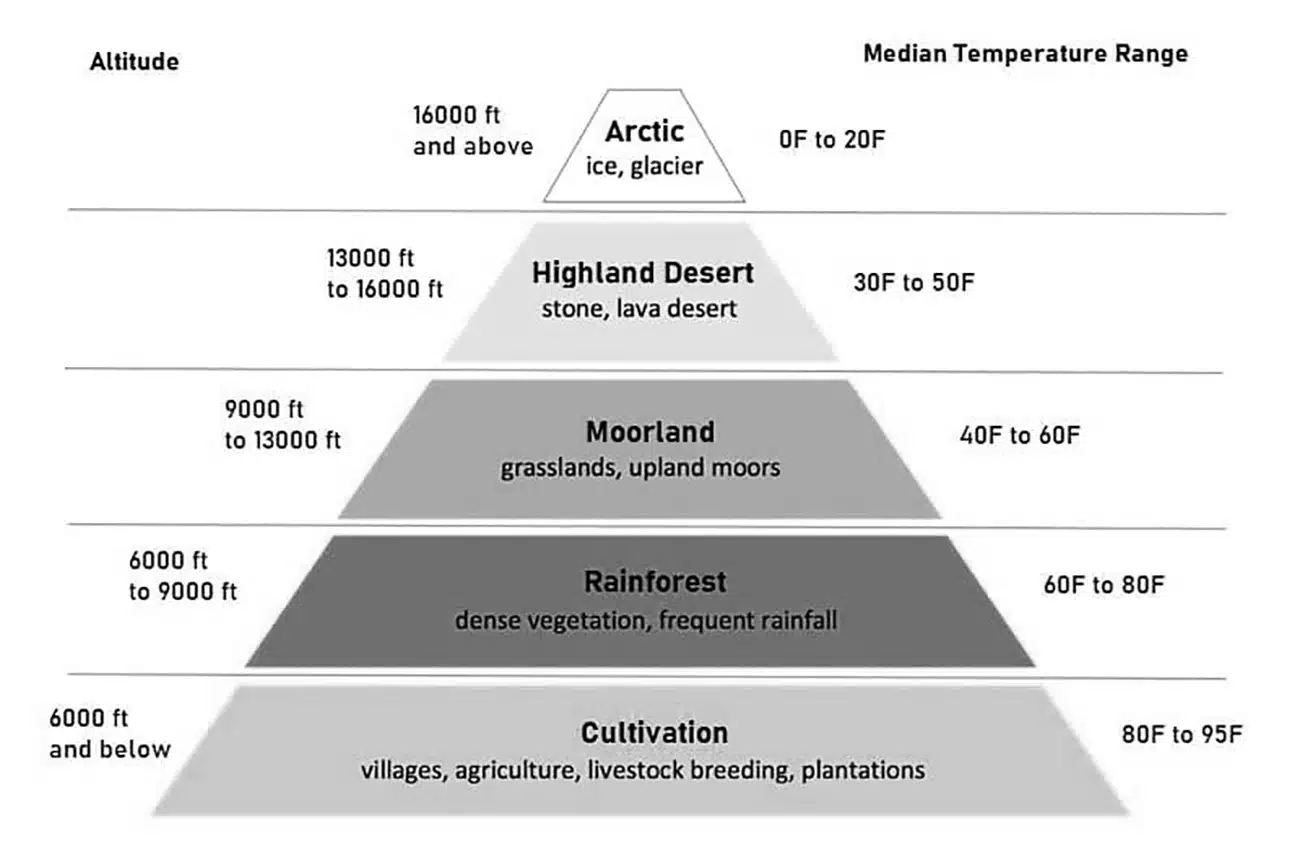
Zone 1: Cultivation Zone (800m – 1,800m) | 20°C to 30°C
Before you even enter the national park gates, you pass through the cultivation zone — lush farmland growing coffee, banana, and maize on Kilimanjaro’s fertile lower slopes. Temperatures here are warm and humid, ranging from 20°C to 30°C during the day. Expect sunshine, light breezes, and conditions not unlike a warm East African afternoon. Light, breathable clothing is all you need at this stage.
Zone 2: Montane Forest (1,800m – 2,800m) | 12°C to 20°C
As you pass through the park gate and begin your ascent, the air immediately begins to cool. The montane rainforest is dense, humid, and frequently misty — particularly in the afternoons. Temperatures range between 12°C and 20°C, and rain is common. This is where many climbers underestimate the need for a waterproof layer. Keep your rain jacket accessible, not buried at the bottom of your pack.
Most routes begin their first day in this zone. Whether you’re climbing the Machame Route, the Lemosho Route, or the Marangu Route, your first camp will be within or just above this zone.
Zone 3: Heath & Moorland (2,800m – 4,000m) | 5°C to 15°C
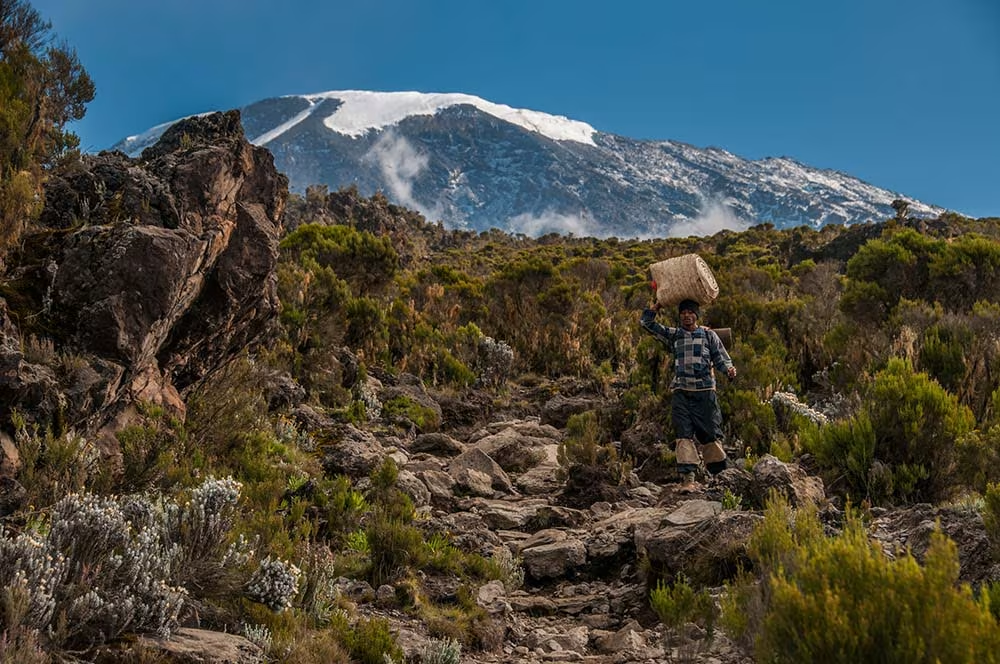
Above the treeline, the landscape opens up dramatically into heather, giant lobelias, and alien-looking groundsel plants. This is one of Kilimanjaro’s most visually striking zones — and where the temperature starts to bite. Daytime temperatures sit between 5°C and 15°C, and evenings drop sharply once the sun sets. This is the zone where a solid mid-layer becomes your best friend. Afternoon mist and light rain are still common, so keep your waterproofs handy.
Zone 4: Alpine Desert (4,000m – 5,000m) | -5°C to 5°C
Here, the vegetation largely disappears. The landscape turns dusty, rocky, and barren — beautiful in a stark, otherworldly way. Temperatures during the day hover between -5°C and 5°C, but wind chill can make it feel significantly colder. Nights are genuinely cold, often dropping to -10°C or below at camp. This is also where altitude sickness becomes a real concern. Camps like Barafu (4,673m) and Kibo Hut (4,703m) sit in this zone, and the cold combined with thin air means your body is working hard just to stay warm.
Your acclimatization strategy matters more here than anywhere else. Our guides will pace your ascent carefully to give your body the best chance to adjust — both to the altitude and the cold.
Zone 5: Arctic Summit Zone (5,000m – 5,895m) | -20°C to -10°C
Welcome to the roof of Africa. The summit zone is a glaciated, arctic environment where temperatures range from -10°C to -20°C — and lower with wind chill. Most summit attempts begin around midnight, meaning climbers face these temperatures in the dark, when the cold is at its most severe. Wind at this altitude can be relentless. Every layer you have goes on. Every piece of insulation earns its place in your pack.
This is why our gear list includes specific recommendations for summit night — from heavyweight gloves to balaclava to insulated boots. The climbers who reach Uhuru Peak and enjoy the moment are almost always the ones who arrived dressed correctly.
Temperature at Night vs. During the Day
One of the most important things to understand about Kilimanjaro temperatures is the dramatic difference between daytime and nighttime. During the day, especially at lower elevations, the sun can feel genuinely warm. But once it sets, temperatures plummet rapidly — particularly above 4,000 metres.
Here is a practical overview of what to expect:
| Elevation / Zone | Daytime Temperature | Nighttime Temperature |
|---|---|---|
| Cultivation Zone (800–1,800m) | 20°C – 30°C | 12°C – 18°C |
| Rainforest (1,800–2,800m) | 12°C – 20°C | 8°C – 12°C |
| Moorland (2,800–4,000m) | 5°C – 15°C | 0°C – 5°C |
| Alpine Desert (4,000–5,000m) | -5°C – 5°C | -10°C – -5°C |
| Summit Zone (5,000–5,895m) | -10°C – -5°C | -20°C – -10°C |
How Does Season Affect Kilimanjaro Temperature?
As mentioned, altitude is the dominant temperature driver on Kilimanjaro. That said, the time of year you climb does influence conditions in more subtle ways:
January – March (Warm & Dry Season)
The mountain is relatively dry and clear. Summit temperatures remain cold, but daytime conditions on the lower slopes are warm and pleasant. This is one of the best windows for climbing, with good visibility and firm trail conditions.
April – May (Long Rains)
The long rainy season brings significant moisture to the lower and middle zones. The rainforest becomes very wet, trails can be muddy, and cloud cover reduces visibility. Summit temperatures are similar, but the wetter conditions at lower elevations make it feel colder. This period is generally not recommended for climbing.
June – October (Cool & Dry Season)
One of the most popular and reliable climbing windows. The mountain is dry, skies are often clear, and trail conditions are excellent. Summit temperatures can be particularly cold during July and August, so ensure your cold-weather gear is at its best. The full moon climbs during this period are especially memorable.
November – December (Short Rains)
A shorter, lighter rainy season. Conditions are generally manageable and the mountain is less crowded than peak season. December in particular can offer excellent climbing conditions as the rains ease off.
How to Layer for Kilimanjaro Temperatures
The golden rule for Kilimanjaro is the three-layer system. Your clothing needs to keep you cool on the warm lower slopes, dry in the rainforest, insulated in the alpine desert, and windproof at the summit — all within the same pack. Here’s how to think about it:
Base Layer — Moisture Management
A good moisture-wicking base layer keeps sweat away from your skin. Merino wool is outstanding for temperature regulation and odour resistance over multiple days. Avoid cotton entirely — it retains moisture and will chill you rapidly at higher altitudes.
Mid Layer — Insulation
A fleece or down jacket provides your core warmth. Down is lighter and packs smaller; fleece performs better when damp. Ideally, bring both — a fleece mid-layer for general use and a down puffy specifically for summit night and cold camp evenings.
Outer Layer — Wind & Waterproofing
A waterproof, windproof shell jacket and trousers are non-negotiable. On summit night, wind is often the most dangerous element — not the temperature alone. A solid outer shell containing all your insulation layers is what keeps you moving upward.
For a complete, route-tested breakdown of everything you need, see our full Kilimanjaro gear list.
Summit Night: The Temperature Reality
Summit night is the most physically and mentally demanding part of any Kilimanjaro climb. You’ll leave camp around midnight — typically from Barafu Camp on the Machame, Lemosho, or Umbwe routes, or from Kibo Hut on the Marangu Route — and push for the summit over 6–8 hours in the dark.
At midnight, temperatures at 4,700m are already well below freezing. By the time you reach Stella Point (5,756m) and push on to Uhuru Peak, you’re in genuine arctic conditions. Wind chill can bring the effective temperature down to -25°C or lower.
Our guides will check on you constantly during the summit push. We monitor for signs of altitude sickness, cold exposure, and exhaustion. We know this mountain and we know what it takes to get you to the top and back down safely. That’s why our summit success rate is among the highest on the mountain.
Temperature and Your Health on the Mountain
Cold temperatures don’t just affect your comfort — they affect your body’s ability to perform. At high altitude, your body is already working harder to extract oxygen from thinner air. Cold compounds this stress. Here’s what to be aware of:
Hypothermia
If your core temperature drops too low, hypothermia sets in — first subtle (shivering, confusion, poor coordination), then dangerous. Proper layering, staying dry, and eating regularly are your best defences. Our guides are trained to spot early signs.
Frostbite
Exposed skin at the summit — fingers, toes, nose, ears — is vulnerable to frostbite in extreme cold and wind. Heavyweight gloves (ideally with liner gloves underneath), a balaclava, and insulated boots are essential. See our health and medications guide for more detail on cold-related risks and how to prepare.
Dehydration
Cold air is dry air. At altitude, you lose moisture rapidly through breathing — much faster than you realise because the cold suppresses your sense of thirst. Drink consistently throughout each day, even when you don’t feel thirsty. Warm drinks at camp are especially helpful for maintaining core temperature.
Which Route Handles Temperature Best?
No route avoids Kilimanjaro’s temperature zones — they’re determined by altitude, not path. But the route you choose affects how long you spend in each zone and how well your body acclimatizes before facing the coldest conditions. Longer routes generally mean better acclimatization and a higher chance of successfully handling the summit cold.
- Lemosho Route (7–8 days) — Gradual ascent, excellent acclimatization, most recommended
- Northern Circuit (9 days) — Longest route, highest success rate, best cold preparation
- Machame Route (6–7 days) — Popular and scenic, good acclimatization profile
- Rongai Route (6–7 days) — Drier approach from the north, less rainfall in lower zones
- Marangu Route (5–6 days) — Hut accommodation keeps you warmer at night; shorter acclimatization window
- Umbwe Route (6 days) — Steep and fast; less time to acclimatize before cold zones
Not sure which route is right for you? Our team at Northern MasaiLand Safaris will match you to the perfect route based on your experience, timeline, and goals. Visit our trip planning page or read our complete climbing guide to explore your options.
Insider Tips for Managing Kilimanjaro Temperatures
Start Each Morning With All Your Layers On
Dawn departures — especially above 3,500m — are bitterly cold. Don’t make the mistake of thinking you’ll warm up quickly. Dress fully warm from the moment you leave your tent. You can always remove layers as the sun rises.
Never Let Your Water Freeze
On summit night, water in your hydration bladder tube will freeze. Use an insulated sleeve for your tube, carry a Nalgene bottle inside your jacket close to your body, or ask your guide about warming strategies. Dehydration on summit night is one of the most common and avoidable problems.
Sleep With Tomorrow’s Clothes in Your Sleeping Bag
At high camps, changing into cold clothes in a cold tent is miserable and slows your departure. Stuff your base layers, hat, and gloves into the foot of your sleeping bag before you sleep. They’ll be warm and ready in the morning.
Protect Your Electronics
Cold drains batteries rapidly. Camera batteries, phone batteries, and headlamps all lose charge fast at low temperatures. Keep them in inner pockets or your sleeping bag. Bring spare batteries for your headlamp — summit night is not the moment for your light to fail.
Eat Well at Every Camp
Your body generates heat through metabolism. Eating well — even when altitude reduces your appetite — is one of the most effective ways to stay warm. Our porters and cooks prepare hot, nutritious meals at every camp. Take advantage of every meal.
Climb With a Team That Knows Every Degree of This Mountain
Understanding Kilimanjaro’s temperatures is one thing. Being prepared for them — with the right gear, the right guide, and the right acclimatization strategy — is everything. When you climb with Northern MasaiLand Safaris, you benefit from the knowledge of guides who have made this journey hundreds of times across every season and every route.
We brief every climber thoroughly before departure, provide detailed gear guidance, and monitor your health and comfort every step of the way. Our rescue protocols and insurance advice ensure that if anything does go wrong, you’re covered.
Browse our Kilimanjaro packages and start planning your climb:
- 9 Days — Northern Circuit Route
- 8 Days — Lemosho Route
- 7 Days — Machame Route
- 6 Days — Marangu Route
- 6 Days — Umbwe Route
Have questions? Visit our FAQs, explore our trip planning page, or get in touch through our contact page. We’re based right here in Arusha, at the foot of Kilimanjaro — and we’re ready to help you reach the summit.
The mountain is cold. But the feeling at the top? That’s pure fire. Climb with Northern MasaiLand Safaris.
Related Reading
- The Complete Kilimanjaro Climbing Guide
- Best Time to Climb Kilimanjaro
- The Kilimanjaro Gear List
- Kilimanjaro Altitude Sickness Guide
- Kilimanjaro Acclimatization
- Kilimanjaro Health and Medications
- How to Train for Kilimanjaro
- Kilimanjaro Height — All You Need to Know
- Kilimanjaro Summit Success Rates
- Kilimanjaro Travel Insurance Guide
- How Long Does It Take to Climb Kilimanjaro?
- Mount Kilimanjaro Facts