
If you have never been on safari before, the entire concept can feel slightly abstract — you know it involves seeing wild animals from a vehicle, but the actual rhythm of a safari day, what genuinely happens hour by hour, often remains unclear until you experience it firsthand. Understanding what to expect in advance helps first-time visitors arrive mentally prepared and able to fully embrace the experience rather than feeling disoriented by an unfamiliar daily structure.
This guide walks through a typical Tanzania safari day from wake-up to bedtime, explaining what actually happens and why the structure works the way it does.
A Typical Safari Day: Hour by Hour
| Time | Activity | What to Expect |
|---|---|---|
| 5:30–6:00am | Wake-up call | Camp staff knock gently with tea/coffee delivered to your tent |
| 6:00–6:30am | Light breakfast | Quick coffee, pastries, fruit before departing — fuller breakfast comes later |
| 6:30–7:00am | Depart for morning game drive | Predator activity is highest in the first hours of light |
| 9:00–10:00am | Bush breakfast stop | Full breakfast served at a scenic spot, often with sweeping views |
| 10:00am–12:30pm | Continue game drive | Exploring different sectors, following any reported sightings |
| 1:00pm | Return to camp | Lunch served, free time to rest during the hottest hours |
| 1:00–3:30pm | Midday rest period | Relax at camp, nap, journal, enjoy the pool if available |
| 3:30–4:00pm | Afternoon tea | Light snacks before departing for the evening drive |
| 4:00–6:00pm | Afternoon/evening game drive | Wildlife becomes active again as temperatures cool |
| 5:30–6:00pm | Sundowner stop | Drinks at a scenic spot watching the sunset |
| 6:30pm | Return to camp | Time to freshen up before dinner |
| 7:00–7:30pm | Dinner | Multi-course meal, often around a campfire or in the mess tent |
| 8:30–9:00pm | Bedtime / escort to tent | Camp staff escort you to your tent for safety |
Why Safari Mornings Start So Early
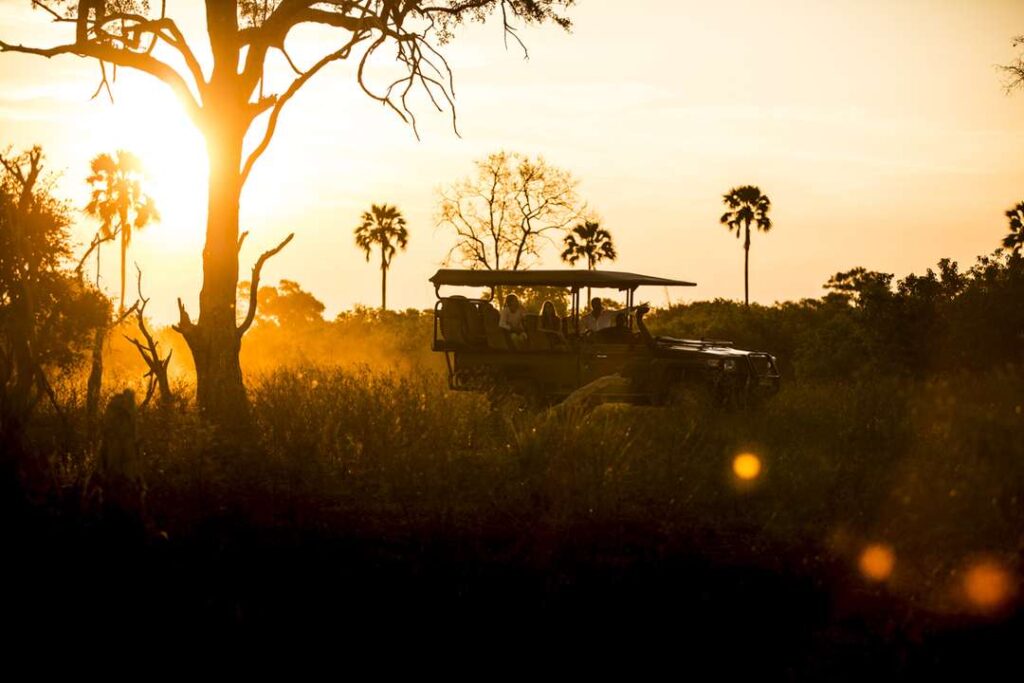
The early start is consistently the part of safari life that surprises first-timers most, but it is genuinely essential. Predator activity — lions finishing nocturnal hunts, leopards returning to daytime resting spots, cheetahs beginning their daily hunting cycle — peaks dramatically in the first two hours after sunrise. Temperatures are also cooler, animals are more active before the day’s heat sets in, and the quality of light for photography is at its absolute best during these early hours.
By 10–11am, particularly in the dry season, many animals retreat to shade and become considerably less active until the afternoon cools again. Understanding this rhythm explains why your safari schedule is built around dawn and dusk rather than the typical 9-to-5 structure of normal life.
Travel Days: Moving Between Parks
Not every day follows the standard two-game-drive structure above. Days involving transfers between parks — for example, from Tarangire to the Ngorongoro Crater — typically combine driving time with a game drive en route, since the transfer itself happens through wildlife areas. These days have a different rhythm, generally departing later in the morning and including wildlife viewing as part of the drive itself rather than as a dedicated separate activity.
What Camp Life Is Like Between Drives
The midday rest period is a genuine and important part of the safari rhythm, not simply downtime to fill. Most camps offer comfortable common areas, sometimes a pool, and the opportunity to simply relax in your tent during the hottest, least productive wildlife-viewing hours. Many guests use this time to nap (the early mornings genuinely do create sleep debt), read, journal about the morning’s sightings, or review and back up photographs from the morning drive.
Evening dinners at safari camps are often genuinely special social occasions — multi-course meals served around a campfire under an extraordinary canopy of stars, free from light pollution. Conversations naturally turn to the day’s sightings, and guides often join guests for dinner, sharing stories and answering questions about the ecosystem.
Adjusting Expectations: Wildlife Is Not Guaranteed
One of the most important mental adjustments for first-time safari-goers is understanding that wildlife sightings, while generally excellent in Tanzania’s parks, are never absolutely guaranteed on any given drive. Some mornings deliver extraordinary back-to-back sightings; others involve longer stretches of driving between encounters. This is part of the authentic nature of wildlife viewing — the animals are genuinely wild and not staged for visitor convenience. Trust that across a multi-day safari, the cumulative experience will be extraordinary even if any single drive has quieter periods.
First Safari Checklist: Mental Preparation
- Embrace the early starts — they genuinely deliver the best wildlife experiences, and you adjust to the rhythm faster than expected.
- Bring patience — the best sightings often require waiting, and rushing diminishes the experience.
- Ask your guide questions — their knowledge transforms the experience from simply seeing animals to genuinely understanding the ecosystem.
- Disconnect from regular schedules — safari operates on wildlife time, not clock time, and the sooner you embrace this, the more rewarding the experience becomes.
- Stay flexible — exceptional sightings sometimes mean extending a drive or adjusting plans, and the best safaris accommodate this naturally.
Frequently Asked Questions
Do all safari days follow the same schedule?
The general dawn-and-dusk structure is consistent across most safari days, though specific timing varies by camp, park, and your guide’s read of the day’s conditions. Some camps offer slightly later start options for guests who prefer it, though this typically means missing some of the best early-morning predator activity.
Is the midday rest period mandatory?
It is the standard structure because wildlife activity genuinely decreases during the hottest hours, making extended midday drives less productive. Some private safaris can adjust this structure on request, but most guests find the rest period a welcome and necessary part of the daily rhythm rather than a limitation.
Start Your First Tanzania Safari
Understanding the rhythm of safari life helps first-time visitors arrive prepared and ready to embrace the experience fully. Our complete Tanzania safari guide covers everything else you need to know before your first trip. Contact Northern Maasailand Safaris today to begin planning a first safari experience designed around realistic, well-managed expectations and extraordinary wildlife encounters.