Nobody talks about the food enough.
You’ll find endless articles about the lions of the Serengeti, the flamingos of Lake Manyara, the summit of Kilimanjaro. And all of that is deserved. But one of the most consistent things our guests tell us after returning home is how much they loved the food — and how little they expected to.
Tanzania sits at a remarkable culinary crossroads. Centuries of Arab, Indian, Portuguese, and East African coastal trade have layered spice, technique, and ingredient into a food culture that is genuinely its own. Add to that the extraordinary produce of the equatorial highlands — sweet mangoes, fresh coconut, sun-ripened tomatoes, fragrant spices from Zanzibar’s clove plantations — and what you get is a cuisine that is warm, generous, and deeply satisfying.
At Northern Masailand Safaris, we think of food as part of the experience — not an afterthought. Whether you’re sitting down to a bush breakfast with a herd of elephants drifting past at Tarangire, or eating a three-course dinner under canvas as a hyena calls somewhere out in the darkness, the food around your safari table is part of the story. Here’s what to expect.
The Foundations of Tanzanian Cuisine
Tanzanian home cooking is honest, nourishing food built around staple grains, legumes, fresh vegetables, and slow-cooked stews. It is food designed to satisfy — generous portions, deep flavours, and a warmth that reflects the culture it comes from.
Ugali
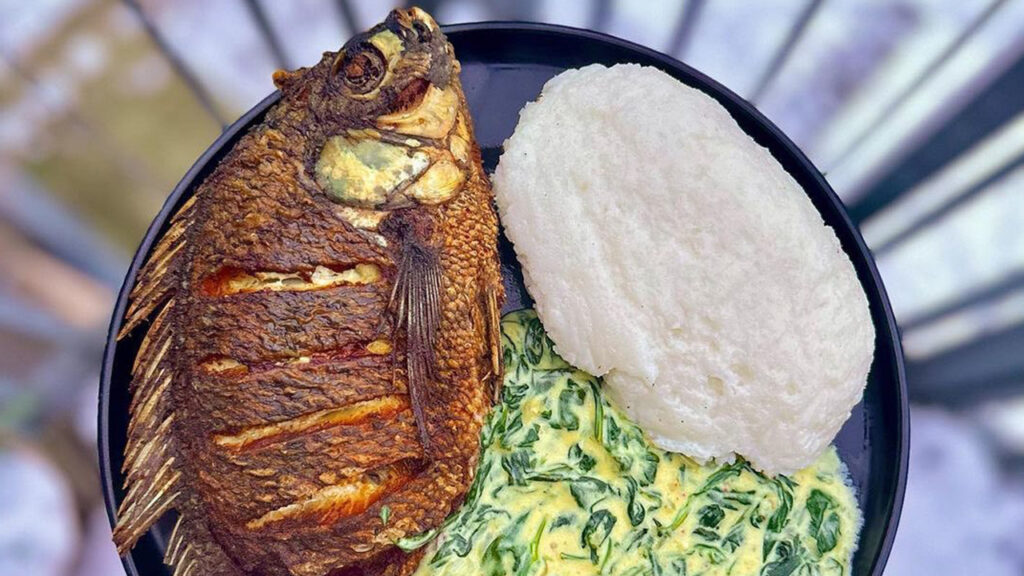
If there is one dish that defines everyday Tanzanian cooking, it is ugali. This is a stiff, smooth porridge made from maize flour, cooked until it forms a firm, dough-like consistency. It is made fresh for every meal and served in a large mound alongside a stew, sautéed greens, or grilled meat. You eat it with your hands — breaking off a small piece, rolling it into a ball, pressing a dimple into it with your thumb, and using it to scoop up whatever accompanies it.
Ugali has almost no flavour of its own. That’s the point. It is the quiet, dependable anchor of the meal — the thing that carries everything else. Once you understand it, you’ll find yourself craving it.
Rice
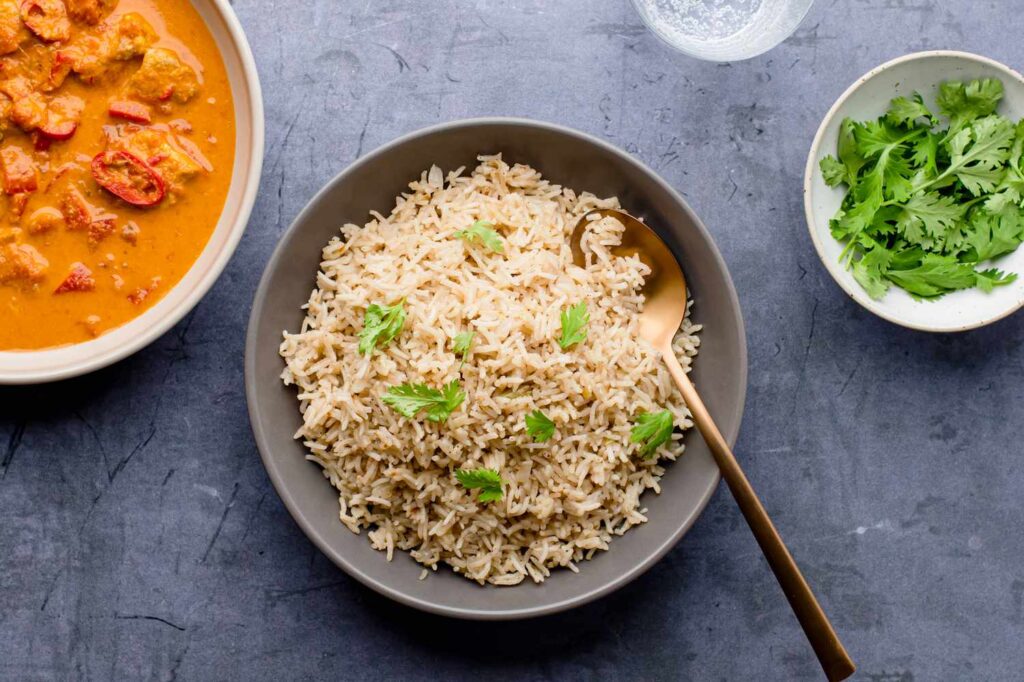
Rice is ubiquitous across Tanzania, particularly in coastal regions and on Zanzibar. Plain boiled rice is common, but pilau — spiced rice cooked with cumin, cinnamon, cardamom, and black pepper — is one of Tanzania’s most beloved dishes. Its aroma alone is enough to stop you in your tracks. Wali wa nazi, rice cooked in coconut milk, is a coastal classic that combines the creamy richness of fresh coconut with perfectly cooked long-grain rice.
Beans and Legumes
Beans are a daily staple — boiled, stewed, or fried with tomato and onion into a rich, thick sauce called maharage. Red kidney beans, black-eyed peas, and yellow lentils all appear regularly. High in protein and deeply satisfying, they form the backbone of much of rural Tanzanian cooking and are found on every safari camp table.
Meat and Fish
Nyama choma — grilled meat, typically goat or beef — is Tanzania’s great social food. The name means “burned meat” and it’s cooked over charcoal until the outside is beautifully charred and the inside tender and smoky. It’s eaten slowly, with friends, over the course of an evening. Roadside nyama choma spots are a fixture of Tanzanian life, and eating at one is an experience that no restaurant can fully replicate.
Near lakes and along the coast, freshwater fish and seafood take centre stage. Tilapia and Nile perch from Lake Victoria are fried whole or grilled and served simply with rice and tomato salad. On Zanzibar and along the coast, the seafood is extraordinary — freshly caught prawns, octopus, crab, and fish prepared with coconut, tamarind, and Zanzibari spice in combinations that feel simultaneously familiar and entirely new.
Zanzibar and the Spice Coast
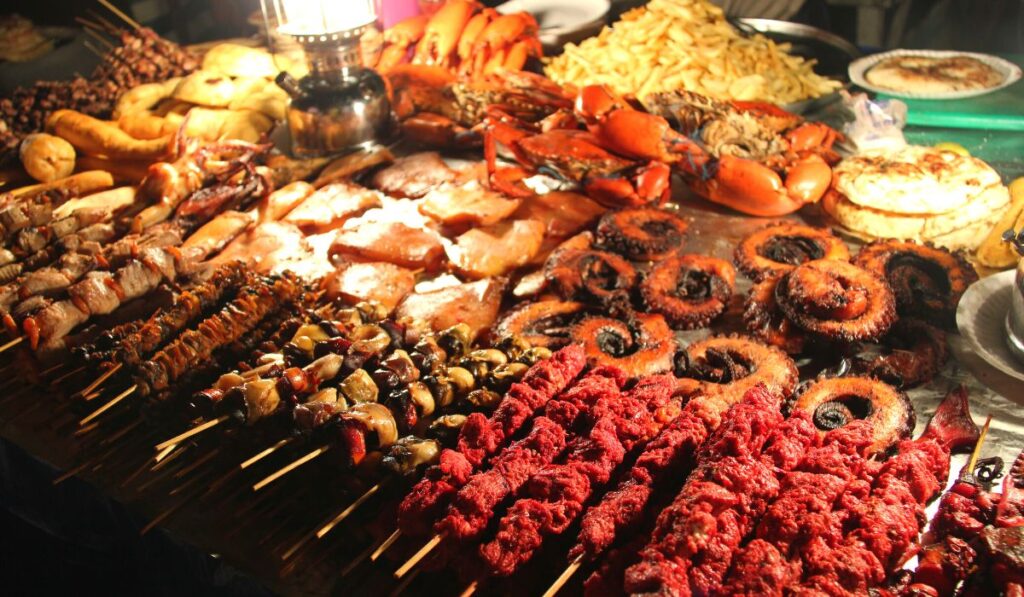
No conversation about Tanzanian food is complete without giving Zanzibar the space it deserves. The island — once the world’s largest producer of cloves — sits at the heart of East Africa’s spice trade heritage, and its food reflects that history in every dish.
Zanzibari cuisine is a beautiful collision of Swahili, Arab, Indian, and Portuguese influences. Biriyani — fragrant, layered rice cooked with spiced meat and saffron — is a celebration dish of genuine complexity. Mchuzi wa samaki, fish curry made with coconut milk, tomato, and fresh spice, is so good it should be mandatory on arrival. And the street food of Zanzibar Town’s Stone City is legendary: pilipili (chilli) grilled octopus, smoky corn on the cob, fresh sugarcane juice, and the extraordinary urojo — a tangy, spiced street soup that locals have been eating for generations.
Zanzibar’s night market at Forodhani Gardens in Stone City is one of East Africa’s great food experiences. As the sun drops into the Indian Ocean, dozens of stalls set up along the old fort walls serving grilled seafood, chapati, Zanzibari pizza, and cold coconut water. It is chaotic, delicious, and utterly unforgettable.
For guests ending their Tanzania safari with a few days on the island, we always recommend building in at least one evening at Forodhani. It is a perfect final night on the African coast.
Breakfast in Tanzania
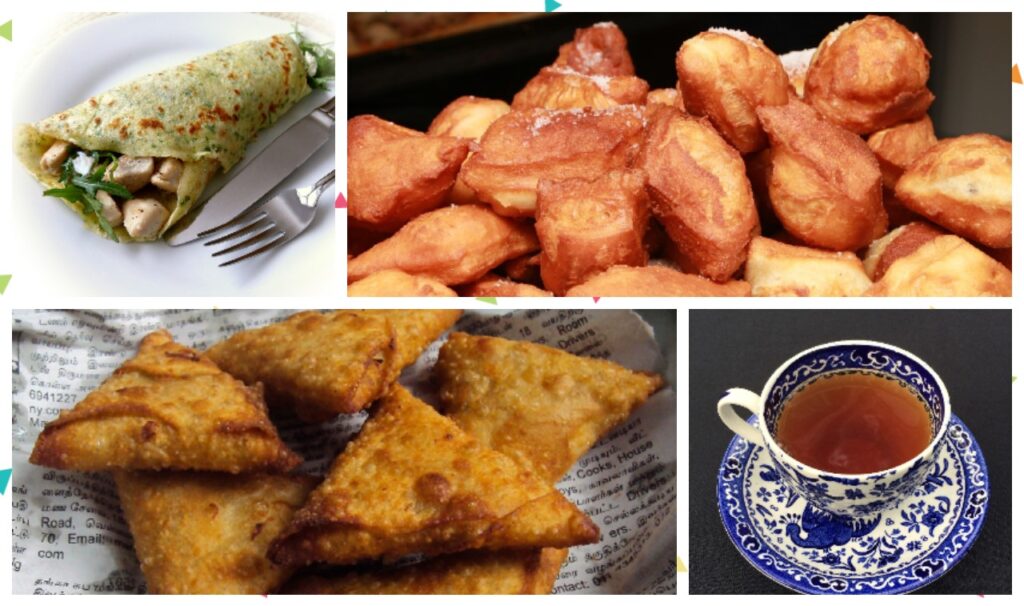
Tanzanian breakfasts are one of life’s quieter pleasures. Mandazi — soft, lightly sweetened fried dough, somewhere between a doughnut and a beignet — are eaten warm with milky, heavily spiced chai tea. The combination of crisp dough and fragrant cardamom-and-ginger tea is a morning ritual that you will miss when you’re home.
Vitumbua are small, round rice pancakes cooked in a special mould — slightly crisp on the outside, soft and pillowy within, and eaten plain or with a light syrup. Chapati — the East African version of the Indian flatbread, richer and slightly flakier than its South Asian cousin — appears at breakfast tables across the country.
Fresh fruit is exceptional throughout Tanzania. Pawpaw (papaya) eaten with a squeeze of lime, sweet pineapple, passion fruit, and tree-ripened mango are not the pale, underripe versions that travel to supermarket shelves abroad. They are the real thing — deeply fragrant and intensely flavoured.
Eating on Safari: What to Expect at the Camps
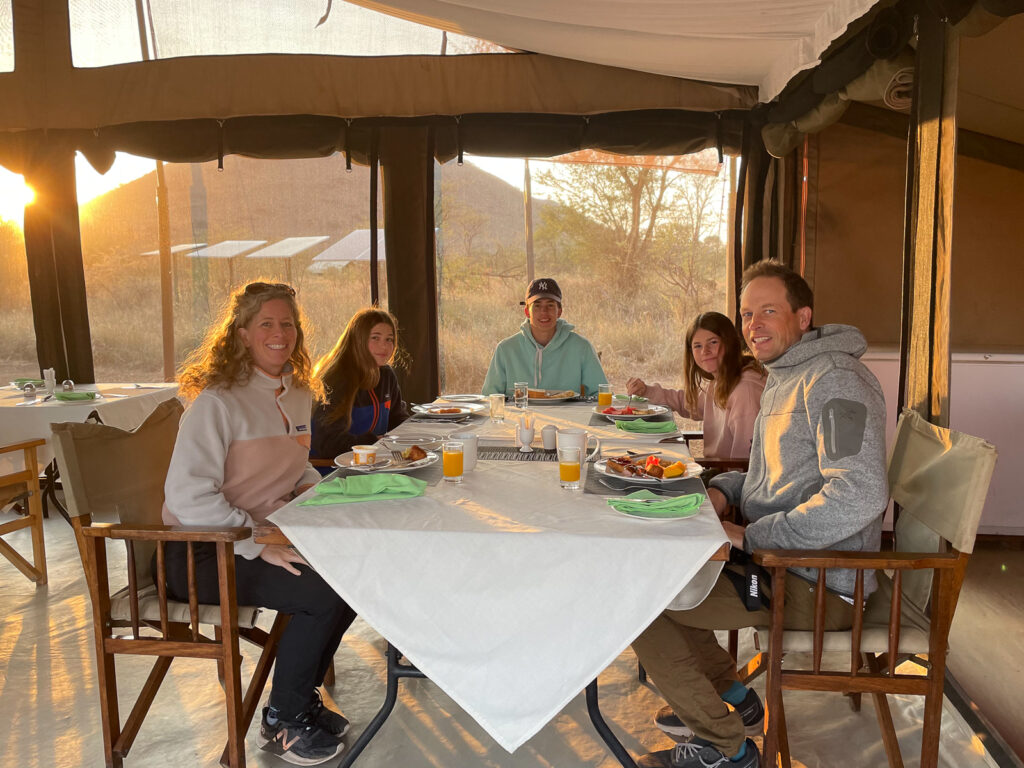
Safari dining is one of the most surprising and delightful aspects of the East African bush experience. The best safari camps take food seriously — not as a logistical necessity but as a genuine expression of hospitality — and the meals served in remote tented camps in the middle of the Serengeti or the depths of Ruaha can be genuinely extraordinary.
Bush Breakfasts
There is very little in life that compares to a bush breakfast. After an early morning game drive, your guide pulls the vehicle into a clearing with a sweeping view — perhaps a river bend, a kopje (rocky outcrop) above the plain, or a spot overlooking a waterhole — and breakfast is laid out: fresh fruit, eggs cooked to order, toast, sausages, and strong coffee poured from a flask into a tin mug while a giraffe grazes silently a hundred metres away.
It sounds almost too cinematic to be real. It isn’t. Bush breakfasts are a highlight that guests describe for years.
Packed Lunches and Picnics
On full-day game drives, lunches are typically packed and eaten in the vehicle or at a designated picnic site. Quality operators pack generously — sandwiches, wraps, samosas, fresh fruit, juice, and usually something baked. Our packed lunches are prepared fresh each morning and are a far cry from the afterthought-level packed meals that budget operators sometimes produce.
Camp Dinners
Evenings at safari camps and lodges are built around the dinner table. Typically three courses, served either in an open-sided dining tent, under the stars at a candlelit outdoor table, or around a fire. The cooking combines local Tanzanian dishes with international influences — roasted meats, fresh fish, curries, salads, and desserts that make the most of Tanzania’s extraordinary tropical fruit.
The setting, more than anything, transforms dinner into something memorable. Stars unpolluted by city light. The sound of the bush settling into the night. A fire crackling nearby. This is not just food — it is the full sensory experience of being exactly where you are.
At Northern Masailand Safaris, we ensure every camp on our itineraries takes food seriously. Whether you’re staying in a mid-range tented camp or a luxury lodge, you will eat well. Dietary requirements — vegetarian, vegan, gluten-free, religious dietary needs — are accommodated with genuine care when communicated to us in advance via our trip planning process.
Tanzanian Street Food Worth Seeking Out
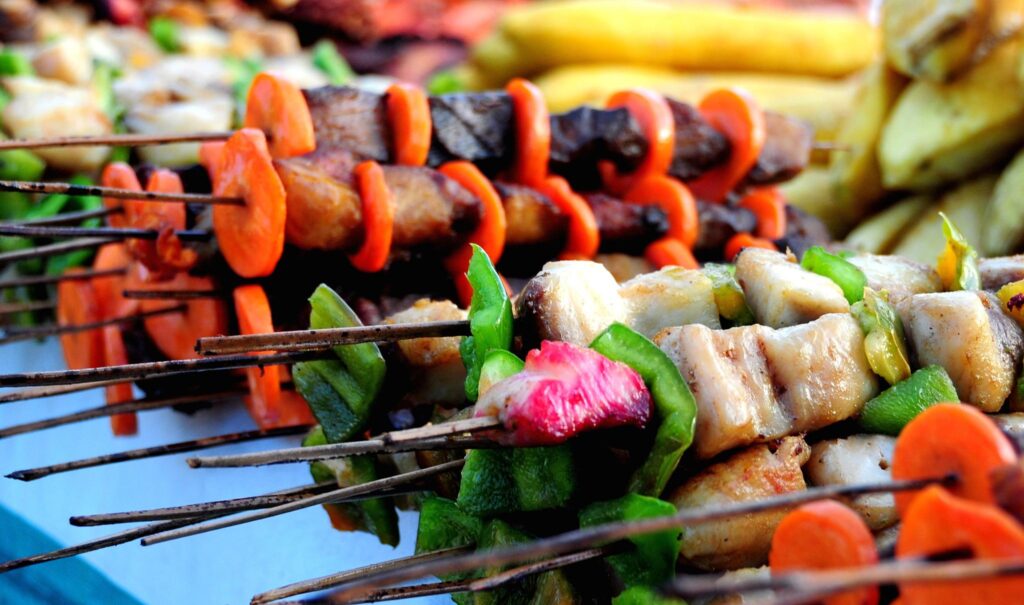
If your itinerary includes time in Arusha or Dar es Salaam before or after your safari, the local street food scene is absolutely worth exploring — with a few sensible hygiene guidelines in mind.
- Mishkaki: Skewered, marinated beef or goat, grilled over charcoal and eaten with a smear of chilli sauce. Tanzania’s answer to a kebab, and one of the most satisfying things you can eat standing at a roadside stall.
- Chips mayai: Literally “chips and eggs” — a thick omelette loaded with chips (french fries) and cooked in a pan until golden and slightly crispy at the edges. It is exactly what it sounds like, and it is perfect.
- Sambusa: Tanzania’s version of the samosa — crisp fried pastry filled with spiced minced meat, lentils, or vegetables. Found everywhere, eaten any time of day.
- Mkate wa kumimina: Swahili bread — a rich, slightly eggy loaf with a soft crumb and golden crust. Eaten with butter, with bean stew, or simply on its own.
- Sugarcane juice: Fresh-pressed at roadside stalls throughout Tanzania, often with a squeeze of lime and a pinch of ginger. Cold, sweet, and energising.
- Coconut water: Green coconuts are hacked open with a machete and handed to you still cold. Hydrating, delicious, and essentially free of cost in coastal areas.
Drinks in Tanzania
Tea and Coffee
Tanzania grows exceptional coffee — particularly the Arabica beans from the slopes of Kilimanjaro and the highlands around Mbeya. Ironically, the best Tanzanian coffee is largely exported to Europe and Japan, but high-quality fresh coffee is readily available at reputable camps, lodges, and cafés. Chai — spiced milk tea brewed with cardamom, ginger, and cinnamon — is the true daily drink of Tanzania and is available everywhere, any time of day.
Local Beers and Spirits
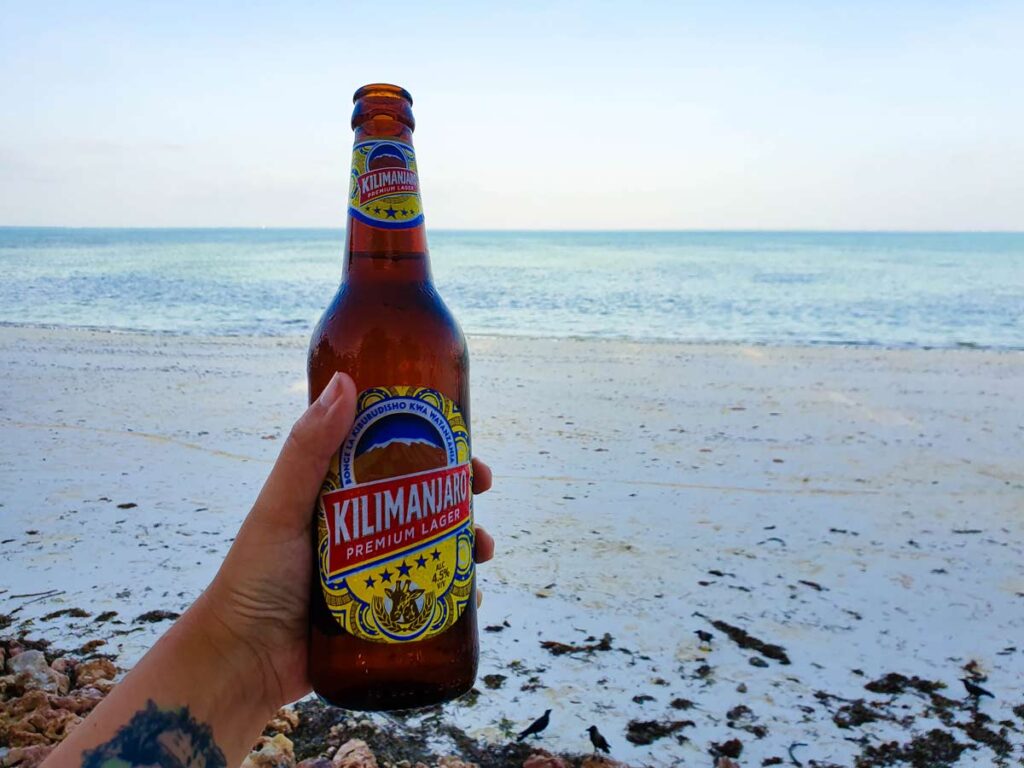
Tanzania’s beer culture is lively and unpretentious. Safari Lager and Kilimanjaro Premium Lager are the country’s most popular brews — clean, cold, and excellent after a long game drive. Serengeti Beer is another local favourite. Konyagi, Tanzania’s national spirit — a clear gin-like liquor — is drunk widely and costs almost nothing.
Fresh Juices
Fresh juice bars in Tanzanian towns press mango, passion fruit, pineapple, and tamarind to order. Avoid ice and pre-made juices from uncertain sources — freshly pressed at a busy, reputable stall is always a good bet.
Food Across Tanzania’s Different Regions
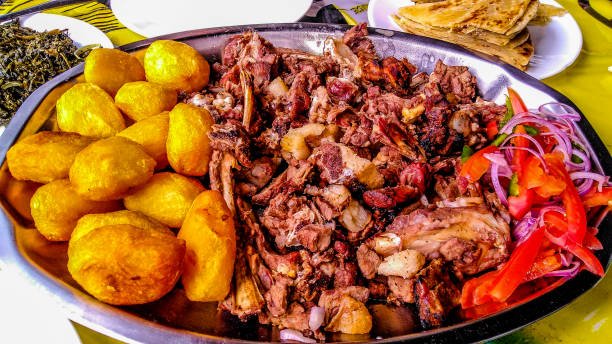
Tanzania’s food varies meaningfully by region, and part of the pleasure of a multi-destination safari is tasting the differences.
In the northern highlands — the Kilimanjaro and Arusha region — the Chagga people of the Kilimanjaro slopes grow some of Tanzania’s finest bananas, coffee, and vegetables in the rich volcanic soil. Ndizi nyama — bananas cooked slowly with meat in a rich gravy — is a distinctly Chagga dish and a genuinely wonderful introduction to the depth of Tanzanian cooking.
On the northern plains — in and around the Serengeti and Ngorongoro — Maasai food culture is simpler and more pastoral: milk, blood, and meat from their cattle have traditionally formed the core of the Maasai diet. A cultural safari that includes a visit to a Maasai community is a remarkable window into this ancient way of living — and occasionally includes the offer of fermented milk, an experience that divides visitors cleanly into two camps.
In the south and west — at Ruaha, Selous, and Katavi — bush cooking takes on an even more elemental quality. Remote, exclusive camps often prepare extraordinary meals from remarkably limited equipment — fresh-baked bread, slow-cooked game-inspired stews, and campfire desserts that taste better than anything you’d find in a city restaurant, partly because of where you are when you eat them.
Along the coast and in Zanzibar, the Arab and Indian influence deepens into something extraordinary. The seafood is fresher, the spicing more complex, the cooking richer. Zanzibar and the coastal strip are genuinely among East Africa’s finest food destinations.
Food in Uganda and Rwanda
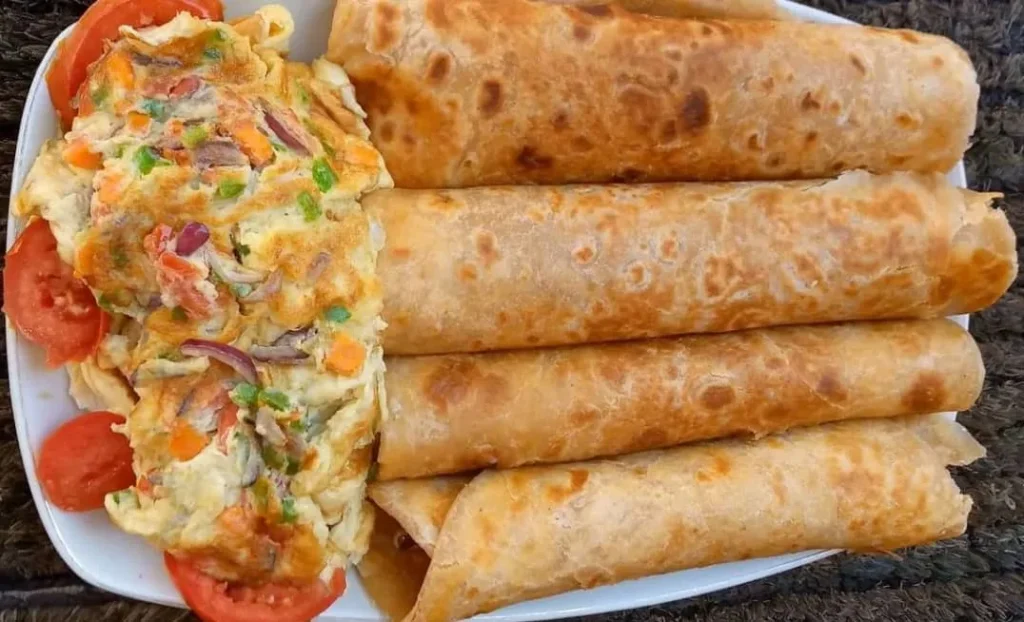
For guests extending their East Africa adventure into Uganda or Rwanda with us, the food culture shifts — and it’s well worth knowing what to expect.
Uganda’s national dish, matoke, is a steamed and mashed green banana dish with a mild, earthy flavour, typically served alongside groundnut (peanut) stew — a rich, creamy sauce that is absolutely worth eating at every opportunity. Rolex — a chapati rolled around a fried egg omelette and fresh vegetables — is Uganda’s beloved street food and one of the most satisfying things you can eat for breakfast anywhere in East Africa.
Rwanda’s food culture is clean, simple, and increasingly sophisticated in Kigali’s growing restaurant scene. Isombe — cassava leaves cooked with eggplant and groundnuts — is a subtly flavoured national dish. Fresh brochettes (grilled meat skewers) are eaten everywhere and prepared with Rwandan spice and care.
Come Hungry
We have brought hundreds of travellers through Tanzania and its neighbours, and one thing remains constant: people leave having eaten better than they expected. The food is not an afterthought here — it is part of the culture, part of the landscape, and part of what makes East Africa what it is.
Whether it’s a bush breakfast watched over by elephants, a plate of nyama choma shared with your guide after a long day in the field, a Zanzibari seafood feast by the Indian Ocean, or a quiet camp dinner as lions call in the darkness beyond the fire — food on a Tanzania safari is something you’ll talk about long after you’ve come home.
At Northern Masailand Safaris, we look after every detail — including what’s on your plate. If you have dietary requirements, preferences, or simply strong feelings about coffee, tell us when you start planning your trip and we’ll make sure every meal is exactly what it should be.
Questions before you travel? Our FAQ page covers the most common ones, and our team is always happy to talk through the details. Get in touch — and start looking forward to eating well.